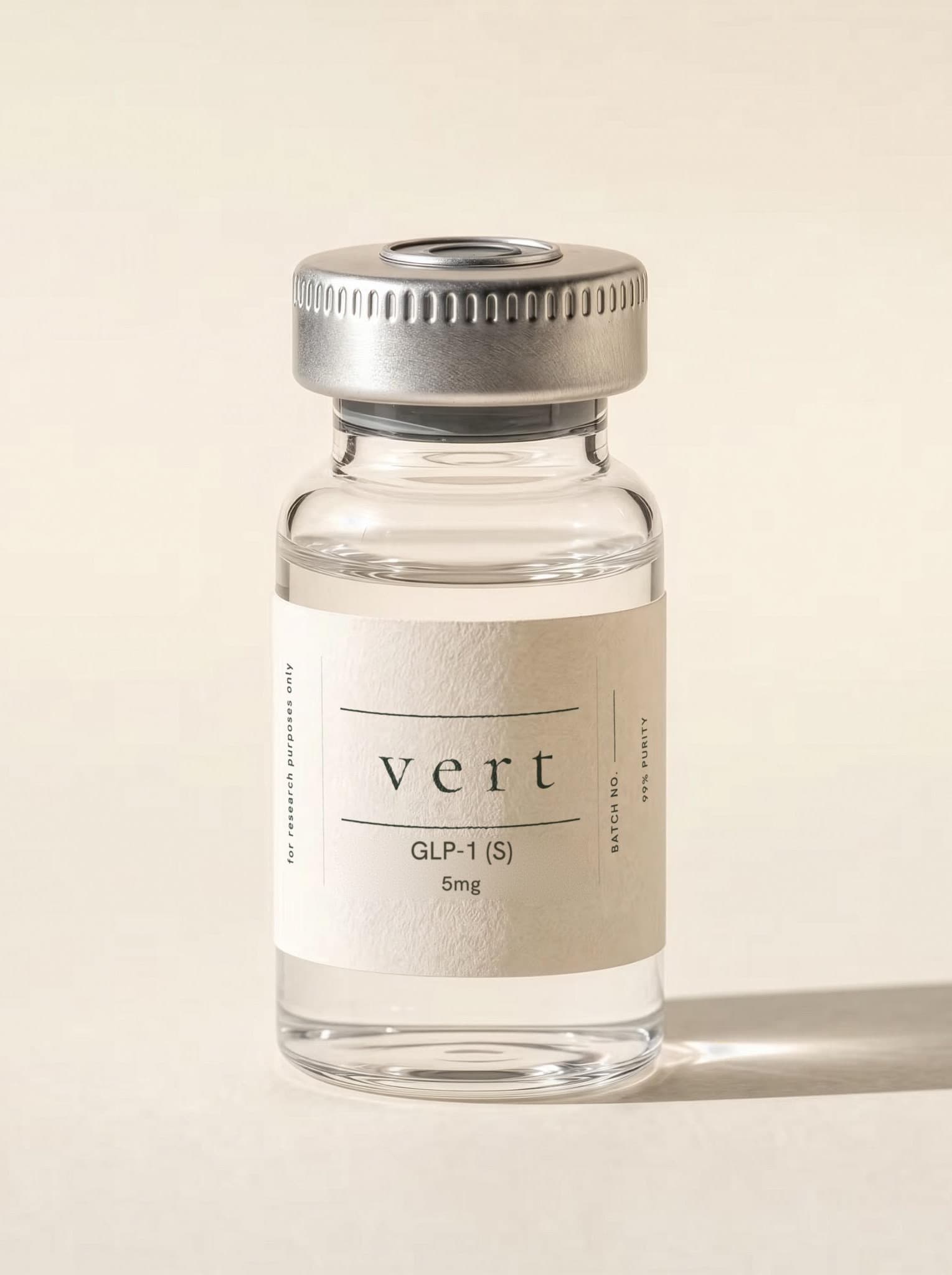
glp-1 (s)
GLP-1 receptor agonist
Research Use Only
from$119.95
All products are sold for research purposes only. We do not provide any guidance for personal use.
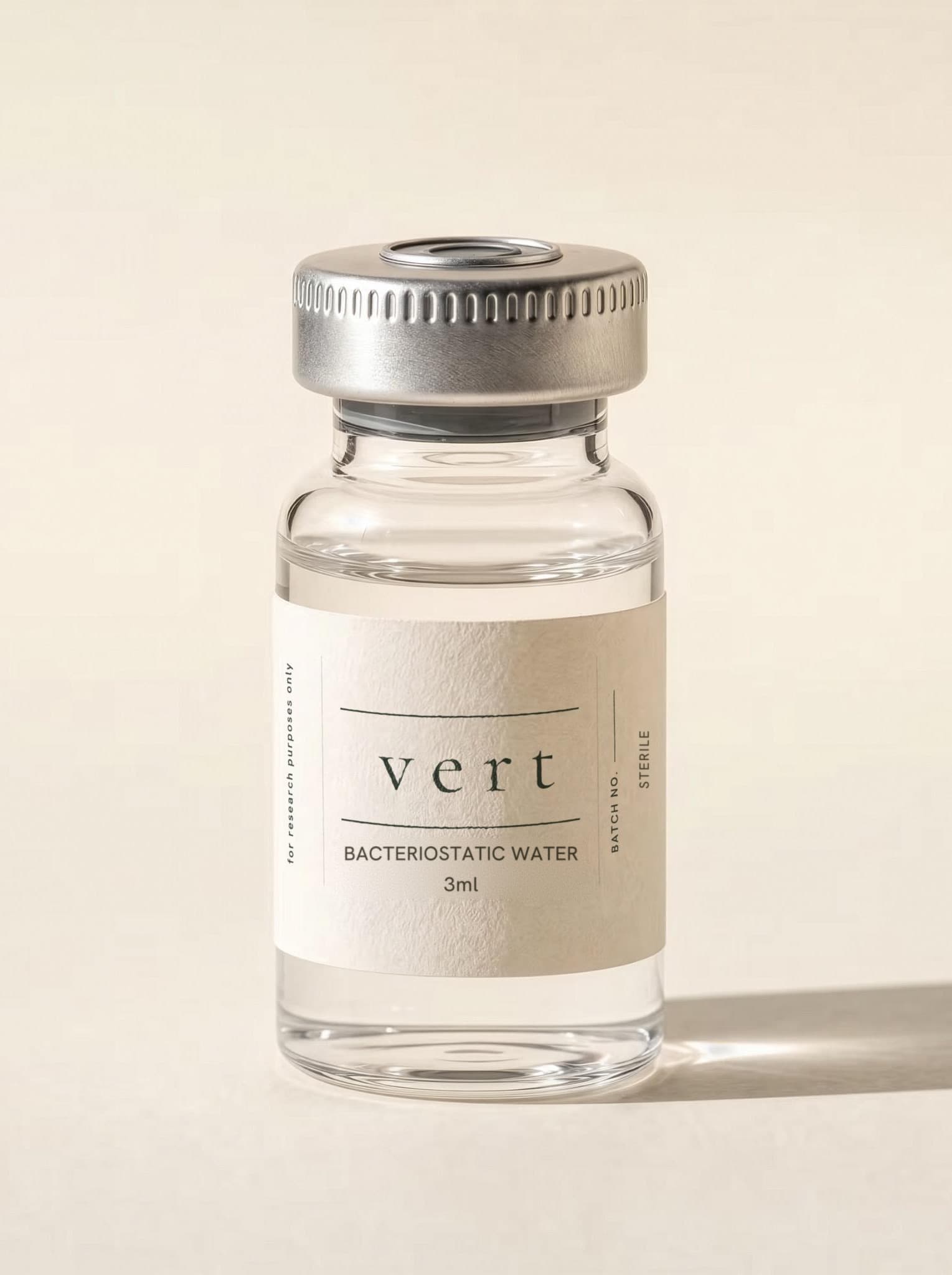
Sterile diluent, 0.9% benzyl alcohol
Bacteriostatic Water is a sterile filtered laboratory diluent preserved with benzyl alcohol at 0.9 percent, supplied as a liquid in 3ml, 10ml and 30ml fill volumes.
Research Use Only
Size
Quantity
Bacteriostatic Water is not a peptide and carries no amino acid sequence. It is sterile water carrying benzyl alcohol at 0.9 percent as a bacteriostatic preservative, stocked as a general laboratory diluent and reagent rather than as a research compound. It has no receptor target and no mechanism class. That is why the specification on this page is shaped differently from every other item in the catalog: a two-component mixture is described by what it contains and how it was filtered and filled, not by one molecular formula, one molecular weight and one purity figure. The preservative is the only component here with a discrete chemical identity to publish. Benzyl alcohol has the molecular formula C7H8O and a molecular weight of 108.14 g/mol, PubChem CID 244, standard InChIKey WVDDGKGOMKODPV-UHFFFAOYSA-N. Those figures describe the preservative alone. They are not the identity of the product, which is a mixture, and water is the balance of it. Supplied as a sterile filtered solution in 3ml, 10ml and 30ml fill volumes. Unlike the lyophilized reference materials elsewhere in this catalog it ships as a liquid, so it has no cake and no powder to describe. The catalog record states the grade and the process, reagent grade and sterile filtered, and no certificate of analysis is published for this item. Storage is stated at 68°F (20°C). Every figure on this page is attributed to the species it belongs to, either the preservative or the formulation as a whole.
Reagent grade, sterile filtered purity; identity confirmed by mass spectrometry. A Certificate of Analysis is available on request. See our quality & COA page.
Supplied as a lyophilized reference material. Lyophilized reference materials are stored desiccated at 68°F (20°C), away from light and moisture. We do not provide reconstitution, preparation, or usage instructions of any kind.
Bacteriostatic Water is sterile water carrying a bacteriostatic preservative, in this case benzyl alcohol at 0.9 percent. Bacteriostatic and bactericidal are distinct terms of art in microbiology, and the product name uses the first. v e r t stocks this item as a general laboratory diluent and reagent. It has no receptor target, no mechanism class of its own, and it is not a research compound in the sense the rest of this catalog uses that term. The specification below is compositional for that reason.
The difference is the preservative and nothing else. Both are sterile; only one carries benzyl alcohol. Sterility describes the state of the liquid at the point it was filtered and filled, and it is a statement about a moment in the process. A preservative is a component that remains in the liquid afterwards, and it is a statement about composition. Those are two different kinds of claim, which is why both appear on this record and why neither substitutes for the other. The concentration figure, 0.9 percent, is the specification that separates this item from unpreserved sterile water. The catalog record does not state whether that figure is expressed by weight in volume or by volume in volume, so it is published here as the supplier states it rather than converted to a basis the record does not give.
Molecular formula C7H8O, molecular weight 108.14 g/mol, PubChem CID 244, standard InChIKey WVDDGKGOMKODPV-UHFFFAOYSA-N. The formula and the mass check out against each other using standard atomic weights: seven carbons at 12.011 give 84.077, eight hydrogens at 1.008 give 8.064, one oxygen gives 15.999, and the sum is 108.14 g/mol. The InChIKey is the standard hashed identifier for that structure, so two records carrying the same key are the same standard InChI. Every identifier in this answer belongs to the preservative, not to the formulation as a whole.
No. No certificate of analysis is published for this item, and the record carries no purity figure, no observed molecular ion and no lot data. What the record does state is the grade and the process: reagent grade, sterile filtered. What it does not state is the basis of the 0.9 percent figure, an endotoxin or bioburden figure, a water-quality grade, or a container and closure specification. Anything the record does not state is not certified by it.
Because the product is a mixture and those three fields describe single compounds. A sequence exists only for a peptide, and this is not one. A molecular weight describes one molecular species, and a preserved diluent contains two components in very different proportion, so a single mass would be a fiction rather than a rounding. A purity percentage of the kind the peptide items in this catalog carry is an area-percent figure, the integrated area of one main peak over the total integrated area, confirmed by UPLC with mass spectrometry against one expected mass; that presumes there is one intended peak and that everything else is an impurity. In a formulation, the second component is intended. The honest shape of a specification for this item is therefore compositional: name the components, state the concentration of the preserved one, state the grade, state the process that made it sterile, and publish the discrete identifiers of the component that has them. That is what the table above does.
Three fill volumes: 3ml, 10ml and 30ml, each a sterile filtered solution. The catalog carries one composition and one grade across all three, so the number on the label is the fill volume rather than a different specification. This is a liquid. There is no lyophilized cake and no powder, which is the visible difference between this item and the reference materials elsewhere in the catalog, and it is also why the record carries no appearance description of the kind a freeze-dried solid gets.
v e r t states 68°F (20°C) for this item, the same storage figure the rest of the catalog carries. The figure describes the item as supplied. Note that a storage temperature and a shelf life are different specifications: the temperature is stated on this record, and an expiry or retest date is not, so the storage figure should not be read as implying one.
None, and the question does not apply to this item. Every other compound page in this catalog names the pathway class its material has been studied in, because every other compound has a mechanism class. This one has no receptor target, no mechanism class and no pathway literature of its own. It is a diluent and a laboratory reagent. If a page like this one named a pathway, the pathway would belong to whatever the material was combined with rather than to the material itself.
FOR RESEARCH & EDUCATIONAL PURPOSES ONLY