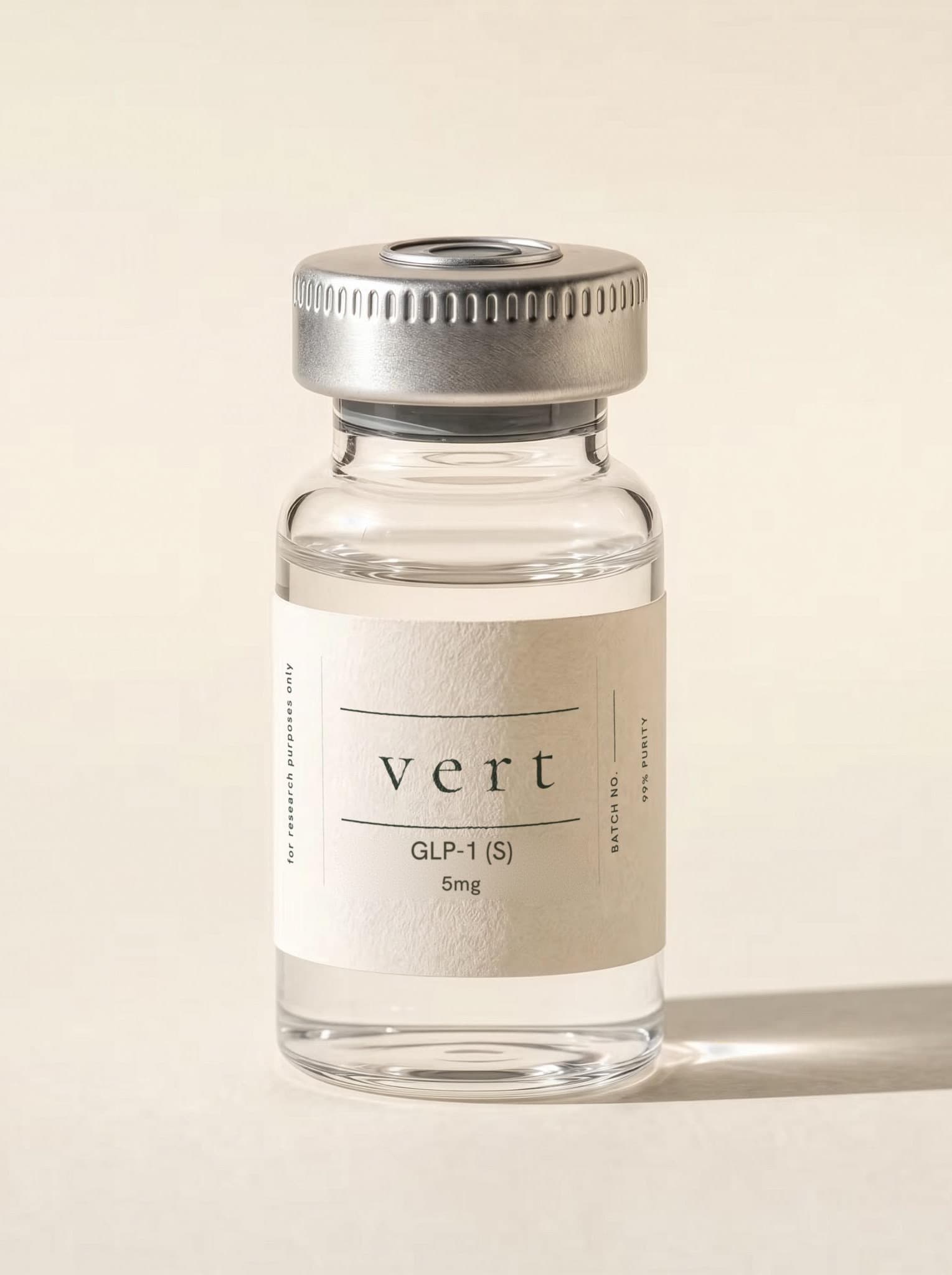
glp-1 (s)
GLP-1 receptor agonist
Research Use Only
from$119.95
All products are sold for research purposes only. We do not provide any guidance for personal use.
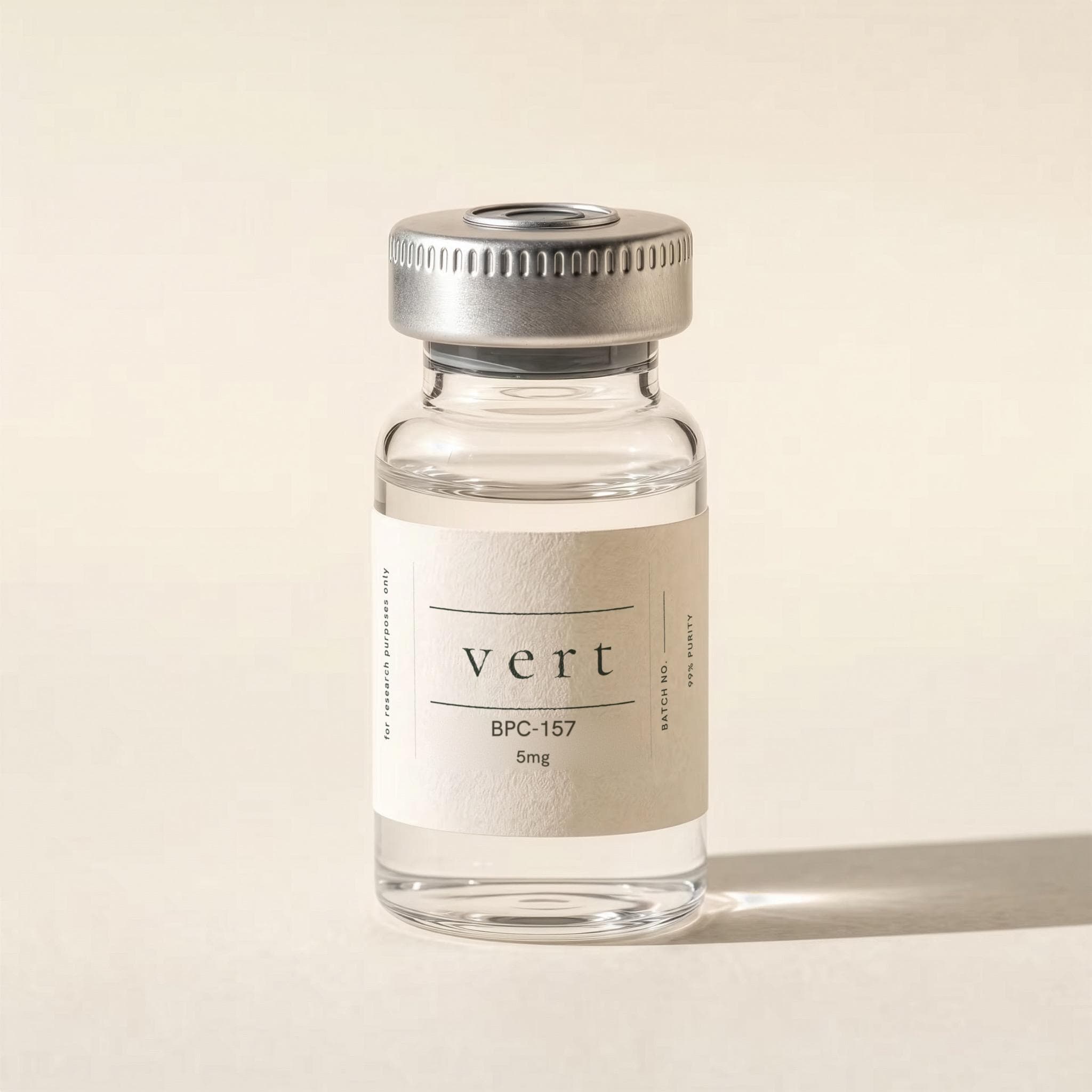
Synthetic pentadecapeptide (PV-BPC 157)
BPC-157 is a synthetic pentadecapeptide, catalog designation PV-BPC 157, molecular formula C62H98N16O22 at 1419.5 g/mol, supplied as a lyophilized reference material in 5mg and 10mg vials with a certificate of analysis published for each size.
BPC-157 is a synthetic pentadecapeptide, meaning a chain of fifteen amino acid residues joined by fourteen peptide bonds; the designation it carries in our catalog is PV-BPC 157. Its molecular formula is C62H98N16O22, its average molecular weight is 1419.5 g/mol, and the identity block behind those figures carries PubChem CID 9941957 and InChIKey HEEWEZGQMLZMFE-RKGINYAYSA-N. The formula and the mass are two statements of the same fact, and they reconcile: using standard atomic weights, the sixty-two carbon atoms contribute 744.68, the ninety-eight hydrogens 98.78, the sixteen nitrogens 224.11 and the twenty-two oxygens 351.98, summing to 1419.56 g/mol against the 1419.5 carried in our identity data. No CAS registry number appears on this page, because that field is present but blank on both certificates and we would rather leave it empty than print an unchecked one. v e r t supplies the compound as a dry lyophilized reference material in a sealed vial, in 5mg and 10mg sizes. Each size is analyzed as its own lot and carries its own published certificate, and the appearance recorded for that lot is printed on that size's document. Identity and purity are characterized by ultra-high-performance liquid chromatography with mass spectrometry, against a purity specification of 98 percent minimum. It is not supplied as a solution, a gel, a cream, or any other prepared formulation; it is stored desiccated at 68°F (20°C), away from light and moisture; and v e r t publishes no preparation or usage instructions of any kind.
>99% UPLC purity; identity confirmed by mass spectrometry. A Certificate of Analysis is published for each size, reporting that lot's identity and purity result. See our quality & COA page.
Supplied as a lyophilized reference material. Lyophilized reference materials are stored desiccated at 68°F (20°C), away from light and moisture. We do not provide reconstitution, preparation, or usage instructions of any kind.
A pentadecapeptide is a chain of fifteen amino acid residues joined by fourteen peptide bonds. The prefix records the residue count and nothing else; it says how long the chain is, not what order the residues run in. "Synthetic" records that the material in the vial is manufactured by chemical synthesis rather than recovered from a source material. PV-BPC 157 is the designation this compound carries in the v e r t catalog. This page publishes the identity data our certificates actually carry, which is the molecular formula, the molecular weight, the PubChem CID and the InChIKey. It publishes no amino acid sequence, because neither certificate prints one, and a formula constrains which atoms are present, never the order they are assembled in.
The molecular formula is C62H98N16O22 and the average molecular weight is 1419.5 g/mol. Each figure is checkable against the other. Using standard atomic weights, carbon contributes 744.68, hydrogen 98.78, nitrogen 224.11 and oxygen 351.98, which sum to 1419.56 g/mol. Peptide listings are a common place for a mass to drift away from its formula, usually because a salt form, a counter-ion or a different chain has been quoted against the wrong record, so a published figure has to say which species it describes. This one describes the free peptide as synthesized, with no counter-ion mass and no water of hydration folded in. Read our own certificate rather than a third-party catalog listing for the formula and mass that describe the material in the vial.
PubChem CID 9941957 is this peptide's record number in the PubChem compound database. It is a database accession rather than a chemical registry number, and it points at one specific structure. The InChIKey HEEWEZGQMLZMFE-RKGINYAYSA-N is a fixed-length hash of the full International Chemical Identifier string for that structure, and it reads in three parts. The first fourteen characters, HEEWEZGQMLZMFE, hash the molecular skeleton, meaning the atoms present and how they are connected, and nothing else. The next block, RKGINYAYSA, hashes the remaining layers, which for a peptide means the stereochemistry at every chiral center; its ninth character marks a standard InChI and its tenth marks the neutral, unprotonated form. The trailing N encodes the InChI version. The practical consequence is that two materials sharing the first block but differing in the second have identical connectivity and different stereochemistry. Searching the full key returns the exact stereoisomer; searching the skeleton block alone does not. This page publishes no CAS registry number for BPC-157, because that field is blank on both of our certificates, and we would rather leave it empty than print one we have not checked.
A certificate is published for each size at a fixed public path, /coa/bpc-157-5mg.pdf and /coa/bpc-157-10mg.pdf. The two sizes are separately analyzed lots, so each document reports its own result against the same specification of 98 percent minimum. The stated method is qualitative and quantitative chemical analysis by ultra-high-performance liquid chromatography with mass spectrometry. Those are two measurements answering two questions. Mass spectrometry addresses identity, matching an observed molecular ion against the mass expected for C62H98N16O22. The purity figure is a chromatographic area-percent measurement, the integrated area of the main peak divided by the total integrated peak area at the detection wavelength, which makes it a relative measure of the organic impurities the column resolves and the detector registers rather than an assay of absolute peptide content. The certificate reports lot, identity, appearance, quantity, purity, molecular formula, molecular weight, the CAS and PubChem CID fields, and the analytical plates. It does not report water or moisture content, residual solvent, counter-ion identity, peptide content by nitrogen determination, endotoxin, or bioburden. What the document does not measure, it does not certify.
FOR RESEARCH & EDUCATIONAL PURPOSES ONLY