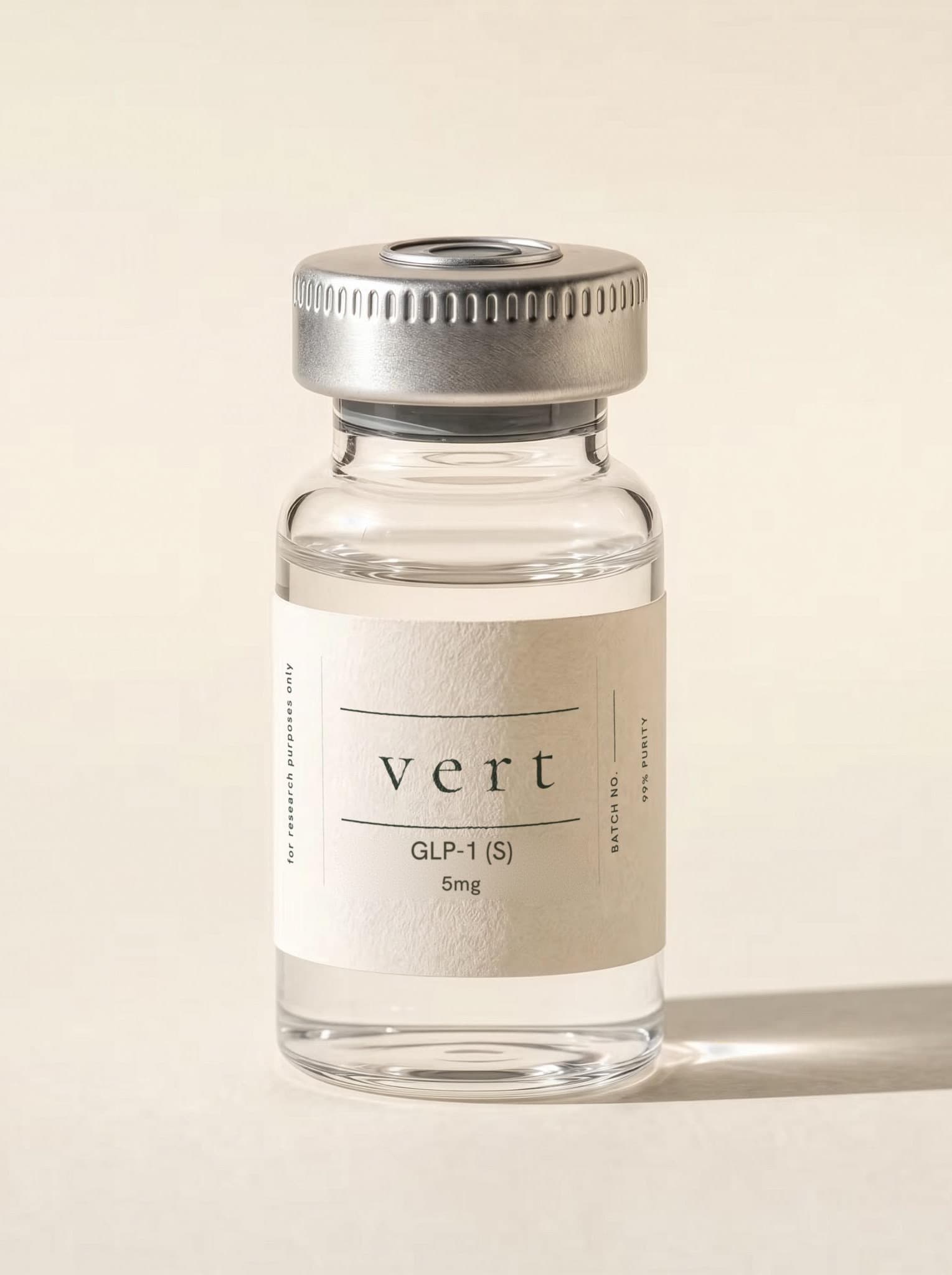
glp-1 (s)
GLP-1 receptor agonist
Research Use Only
from$119.95
All products are sold for research purposes only. We do not provide any guidance for personal use.
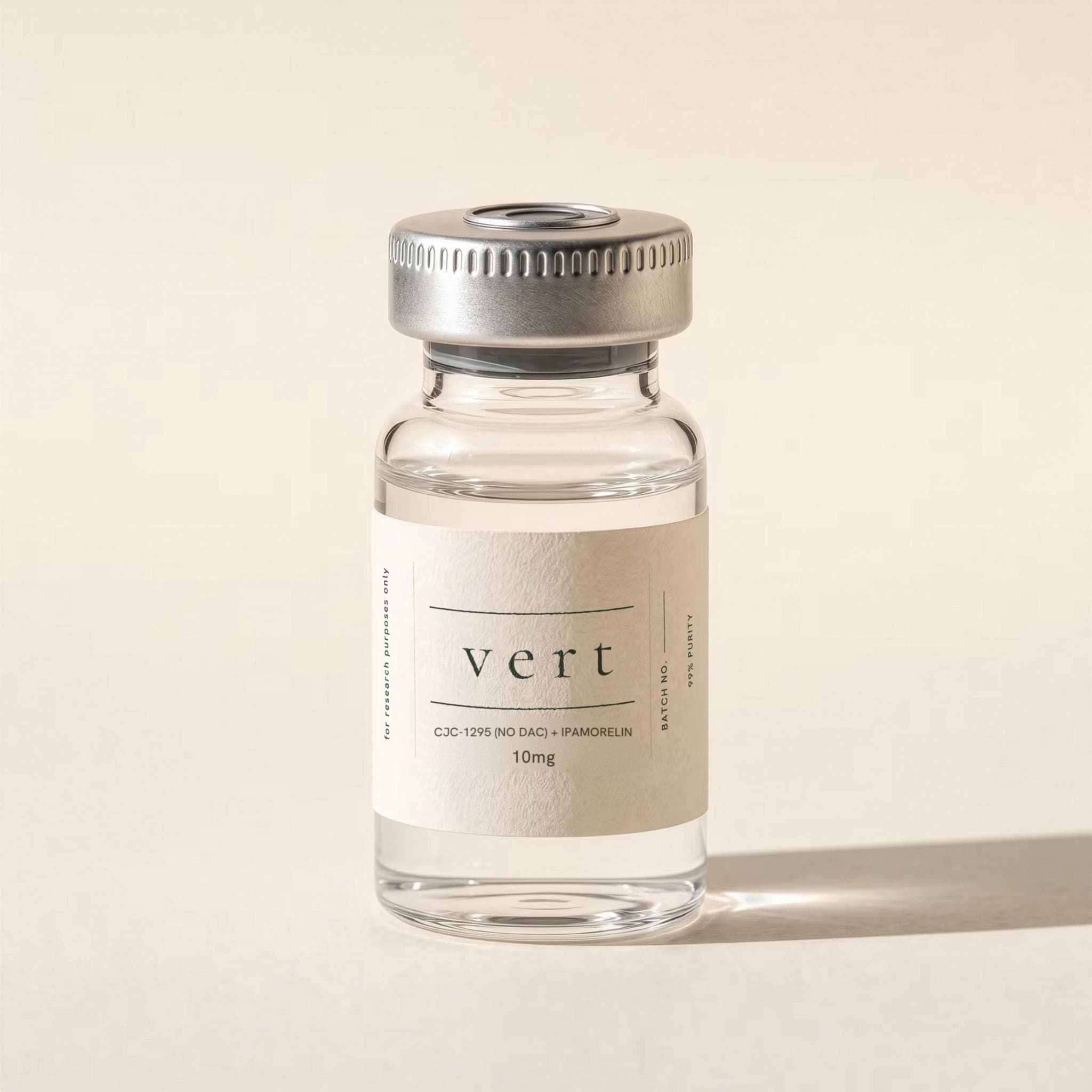
CJC-1295 (NO DAC) + Ipamorelin — 10mg blend
CJC-1295 (NO DAC) + Ipamorelin is a pre-mixed two-component blend, 5mg of each peptide in a single 10mg vial of white lyophilized reference material, with one published certificate of analysis covering the mixture.
CJC-1295 (NO DAC) + Ipamorelin is a mixture, not a compound. One vial holds 10mg of white lyophilized reference material made up of two separately named peptides at 5mg each: CJC-1295 (NO DAC) and Ipamorelin. Because the vial holds two chemical species rather than one, it has no CAS registry number, no molecular formula and no molecular weight of its own. Those fields describe single substances. Identity on this page is therefore given per component, and the mix ratio, 1:1 by mass, is what ties the two together. No registry data is published on this page for either component. We have not been able to confirm a public chemical database record for the CJC-1295 (NO DAC) component under that designation, and rather than carry figures across from a neighboring listing we print none for either half of the blend. A blank field is recoverable; a wrong molecular weight propagates into every listing that copies it. Note also that CJC-1295 (with DAC) is a separate item in this catalog and a distinct chemical species, and figures published under that name do not describe the material in this vial. Supplied as a lyophilized reference material in one size, 10mg total; identity and purity characterized by ultra-high-performance liquid chromatography with mass spectrometry, against a purity specification of 98 percent minimum, with the certificate published at a fixed public path. It is not supplied as a solution, a suspension, or any other prepared formulation, and no preparation or usage guidance accompanies it.
>99% UPLC purity; identity confirmed by mass spectrometry. A Certificate of Analysis is published for each size, reporting that lot's identity and purity result. See our quality & COA page.
Supplied as a lyophilized reference material. Lyophilized reference materials are stored desiccated at 68°F (20°C), away from light and moisture. We do not provide reconstitution, preparation, or usage instructions of any kind.
Two peptides in one vial, 5mg of each, 10mg of material in total. The first is CJC-1295 (NO DAC), the non-DAC form of that peptide, which the separate CJC-1295 (with DAC) item in this catalog is not. The second is Ipamorelin. The two arrive pre-mixed as a single white lyophilized powder rather than as two vials packed together, so the split between them is fixed at the point of manufacture and cannot be varied afterwards. The stated split, 5mg to 5mg, is a ratio by mass. It is not a molar ratio, and the two are not interchangeable: converting mass to moles needs a molecular weight for each component, and no molecular weight is published on this page for either one. No molar ratio is published here either, because the arithmetic for it is missing.
No, and a listing that prints one is printing the wrong kind of field. A CAS registry number identifies a single chemical substance; a molecular formula and a molecular weight describe a single molecular species. A vial holding two different peptides has none of those three things, in the same way a mixture of two salts has no single formula. What identifies this product instead is its composition: the name of each component and the quantity of each. That is why the specification table above is organized per component rather than as one identity block. If a registry number, formula or mass appears against this product anywhere, it is a header field carried over from a single-compound template rather than a fact about the material in the vial. Read the composition, not the header.
They are two separate items in this catalog and two distinct chemical species. The DAC designation marks a modification carried by the CJC-1295 (with DAC) item and absent from the material in this blend, which is the non-DAC form. Because they are distinct species they carry distinct database records, distinct formulae and distinct molecular weights, and a figure published under one name does not describe the other. That is the most common identity error made with this pair: a formula or a molecular weight lifted from the DAC listing and printed against a non-DAC vial, or the reverse. We deliberately do not restate the DAC item's figures on this page, for exactly that reason. If you need identity data for that material, take it from that product's own page and its own certificate.
One certificate is published for this product, at the fixed public path /coa/cjc-1295-ipamorelin-10mg.pdf. It states a purity specification of 98 percent minimum, determined by ultra-high-performance liquid chromatography with mass spectrometry, and records the appearance as white lyophilized powder. We cite the specification rather than a lot result, because the specification is what every vial is held to while a lot result describes only the lot it was measured on. Two further cautions apply because this is a mixture rather than a single compound. First, a chromatographic purity figure is an area-percent measure: integrated peak area of interest divided by total integrated peak area at the detection wavelength. It is a relative measure of chromatographically resolved organic impurities, not an assay of absolute content, and it does not account for water, residual solvent, counter-ion mass, or any species that neither retains on the column nor absorbs at the detection wavelength. Second, and specific to blends, a single purity percentage does not on its own establish the ratio between the two named components. A component-resolved assay confirming 5mg of each is a different measurement. Anything absent from the certificate is not certified by it.
One size only: a single sealed vial holding 10mg of material in total, 5mg of each component, supplied as a dry lyophilized reference material. Lyophilization is freeze-drying, water removed by sublimation from the frozen state under reduced pressure, which leaves a porous solid rather than a compacted one. The appearance recorded on the certificate is white lyophilized powder. It is not supplied as a solution, a suspension, a pre-mixed liquid, or any other prepared formulation. Storage is desiccated at 68°F (20°C), away from light and moisture. No preparation or usage guidance is supplied with the material, and none is available on request.
FOR RESEARCH & EDUCATIONAL PURPOSES ONLY