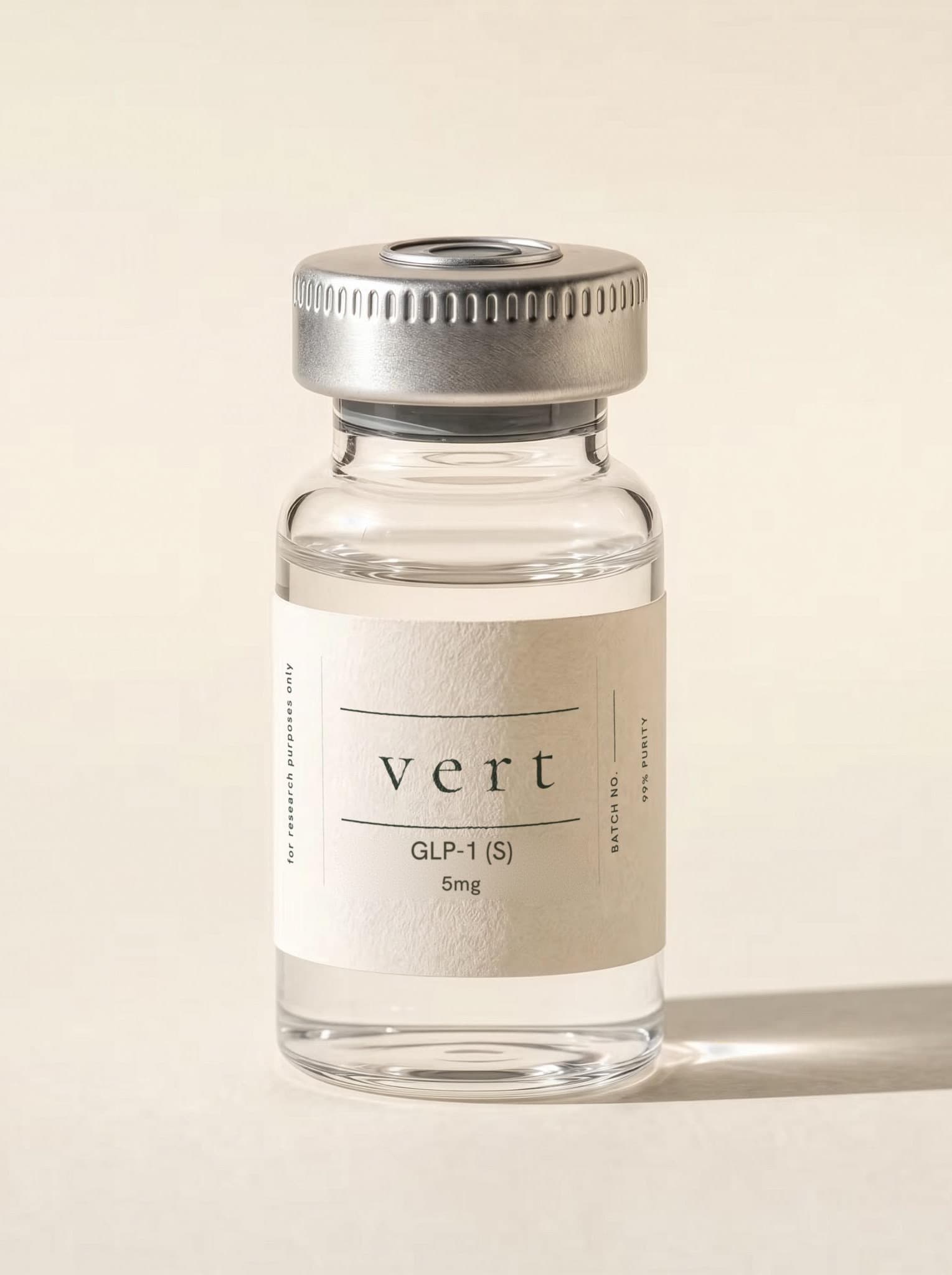
glp-1 (s)
GLP-1 receptor agonist
Research Use Only
from$119.95
All products are sold for research purposes only. We do not provide any guidance for personal use.
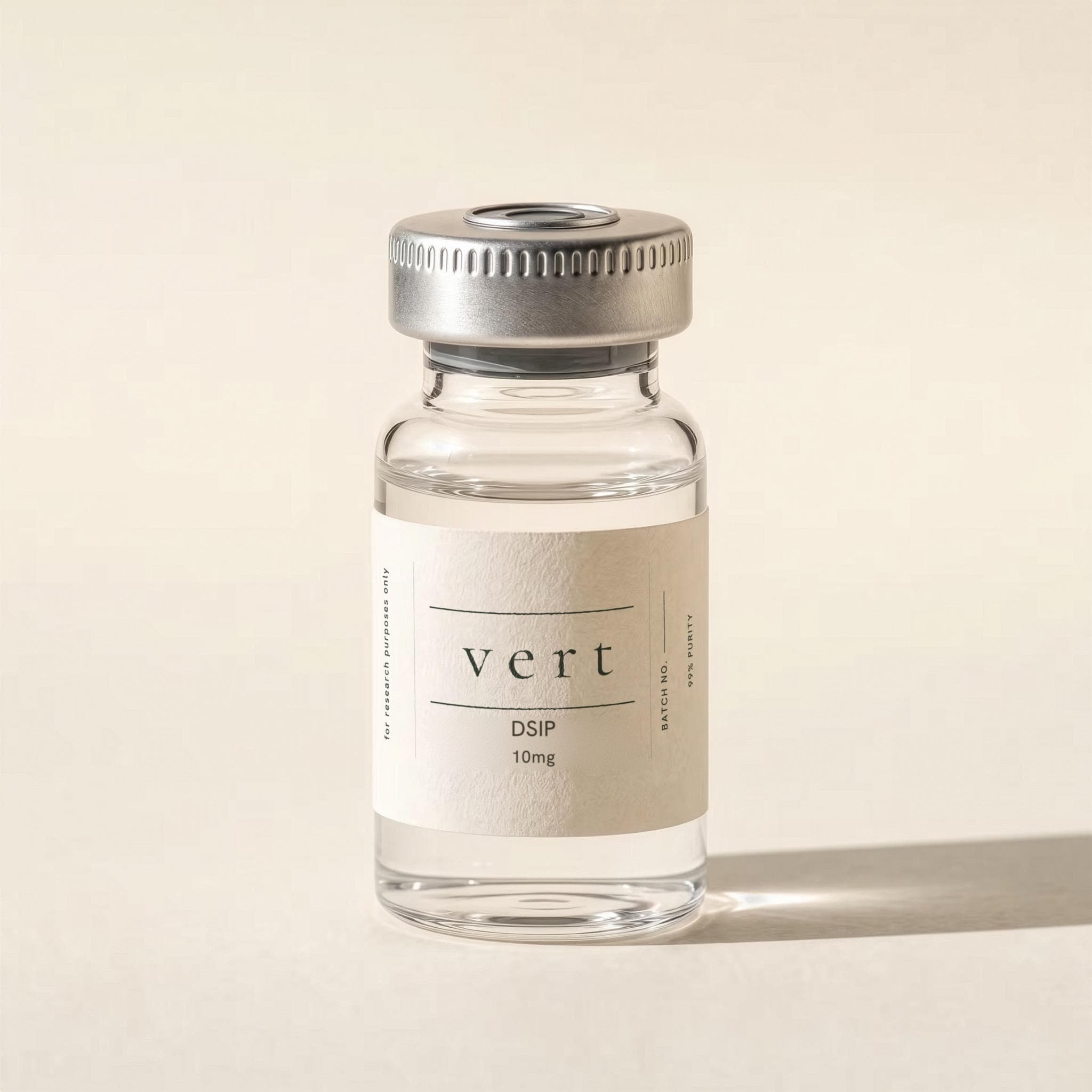
Endogenous nonapeptide, DSIP sequence
DSIP is a nonapeptide reference material with the molecular formula C35H48N10O15 at 848.8 g/mol, cataloged under PubChem CID 68816, supplied as a white lyophilized powder in a single 10mg size with a certificate of analysis published for it.
DSIP is a nonapeptide, nine amino acid residues joined by eight peptide bonds. It is cataloged under PubChem CID 68816 with the standard InChIKey ZRZROXNBKJAOKB-GFVHOAGBSA-N, its molecular formula is C35H48N10O15, and its average molecular weight is 848.8 g/mol. Formula and mass reconcile exactly against nothing more exotic than standard atomic masses: that formula weighs 420.385 for carbon, 48.384 for hydrogen, 140.070 for nitrogen and 239.985 for oxygen, totaling 848.82 g/mol, which rounds to the recorded 848.8. The initialism is a historical descriptive label carried over from the literature where the compound was first characterized. It is not a specification, and v e r t makes no statement about what the material in the vial does. What the vial is certified to hold is a peptide of the recorded identity at the recorded purity. Supplied as a white lyophilized reference material in a single 10mg size; identity and purity characterized by ultra-high-performance liquid chromatography with mass spectrometry against a specification of 98 percent minimum. It is not supplied as a solution, a suspension, a spray, or any other prepared formulation, and no preparation guidance is given on this page.
>99% UPLC purity; identity confirmed by mass spectrometry. A Certificate of Analysis is published for each size, reporting that lot's identity and purity result. See our quality & COA page.
Supplied as a lyophilized reference material. Lyophilized reference materials are stored desiccated at 68°F (20°C), away from light and moisture. We do not provide reconstitution, preparation, or usage instructions of any kind.
DSIP is a nonapeptide, nine amino acid residues joined end to end by eight peptide bonds, cataloged under PubChem CID 68816 with the molecular formula C35H48N10O15 and an average molecular weight of 848.8 g/mol. The initialism is a historical descriptive label attached to the compound in the literature where it was first characterized, not a specification, and v e r t makes no statement about what the material in the vial does. What the vial is certified to hold is a peptide of the recorded identity at the recorded purity, supplied as a lyophilized reference material. Everything else on this page is identity chemistry, analytics and supply.
The molecular formula is C35H48N10O15 and the average molecular weight is 848.8 g/mol, both filed under PubChem CID 68816. The two agree with one another, and the check can be done by hand with nothing but standard atomic masses. Carbon, 35 at 12.011, gives 420.385. Hydrogen, 48 at 1.008, gives 48.384. Nitrogen, 10 at 14.007, gives 140.070. Oxygen, 15 at 15.999, gives 239.985. Those four sum to 848.824 g/mol, which rounds to the recorded 848.8. A mass that fails this check against this formula is describing something else: a salt form, a modified species, or a different compound altogether. The arithmetic is worth two minutes before trusting a figure copied off a third-party listing.
PubChem CID 68816 and the standard InChIKey ZRZROXNBKJAOKB-GFVHOAGBSA-N are the two identifiers to match, alongside the molecular formula C35H48N10O15. The InChIKey is readable in parts. The first fourteen characters, ZRZROXNBKJAOKB, hash the molecular skeleton, so two records that agree there share a connectivity. The next eight, GFVHOAGB, hash the stereochemistry and isotope layers, which is where an all-L peptide separates from a sequence carrying a D-amino acid. The S that follows marks a standard InChI, the A marks version 1, and the trailing N marks the neutral, unprotonated parent rather than a salt. Two cautions. Public synonym lists for short peptides mix entries between records, so confirm which registry entry a synonym is filed against before relying on it as identity. And this page deliberately does not print a CAS registry number: our verified record for this compound does not carry one, and a registry number quoted from memory is exactly the sort of figure that propagates through catalogs uncorrected. Request it with the certificate rather than taking it from a listing.
DSIP ships as a dry lyophilized reference material in a sealed vial, in one size only, 10mg. Lyophilization is freeze-drying: water is removed by sublimation from the frozen state under reduced pressure, which leaves a porous cake or powder rather than a compacted solid. The certificate records the appearance as a white lyophilized powder. It is not supplied as a solution, a suspension, a spray, or any other prepared formulation. Because only one size is stocked there is one certificate rather than a set, published at /coa/dsip-10mg.pdf. Store the sealed vial desiccated at 68°F (20°C), away from light and moisture.
The certificate is published at a fixed public path, /coa/dsip-10mg.pdf. Identity and purity are determined by ultra-high-performance liquid chromatography with mass spectrometry, against a purity specification of 98 percent minimum, and the appearance is recorded as a white lyophilized powder. The two analytical figures answer different questions. Mass spectrometry establishes identity, comparing the observed molecular ion against the mass expected for the named species. Chromatographic purity is an area-percent figure, the integrated area of the main peak divided by the total integrated peak area at the detection wavelength. Area-percent is a relative measure of chromatographically resolved organic impurities. It is not an assay of absolute content, and it does not account for water, residual solvent, counter-ion mass, or any species that neither retains on the column nor absorbs at the detection wavelength. This page cites the specification rather than a result from any one lot, because the specification is what every lot is held to, while a lot figure goes stale the moment the lot changes. The molecular formula, molecular weight, PubChem CID and InChIKey quoted on this page are drawn from the public chemical record for the compound, not from the certificate. Anything absent from the certificate is not certified by it.
FOR RESEARCH & EDUCATIONAL PURPOSES ONLY