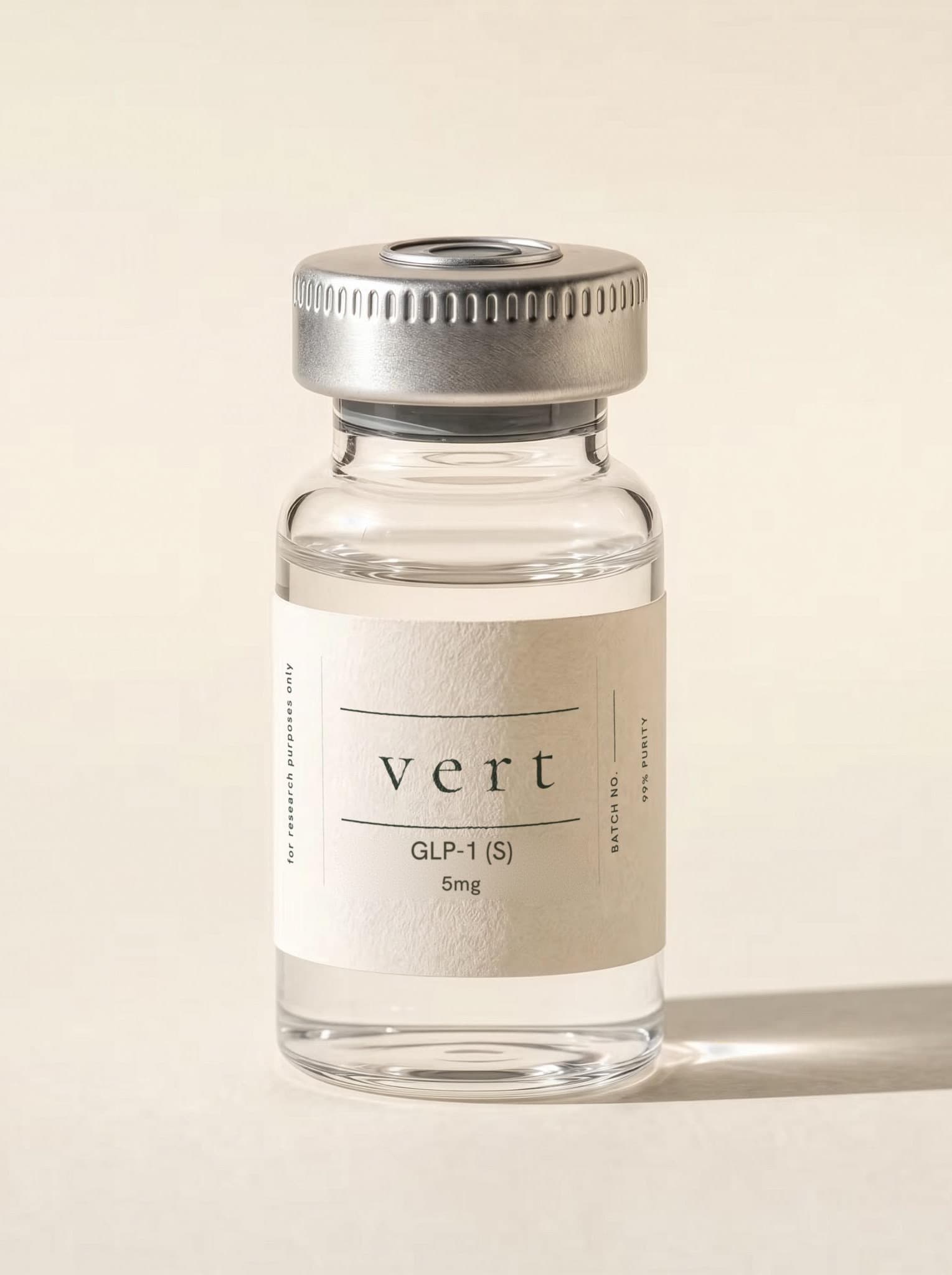
glp-1 (s)
GLP-1 receptor agonist
Research Use Only
from$119.95
All products are sold for research purposes only. We do not provide any guidance for personal use.
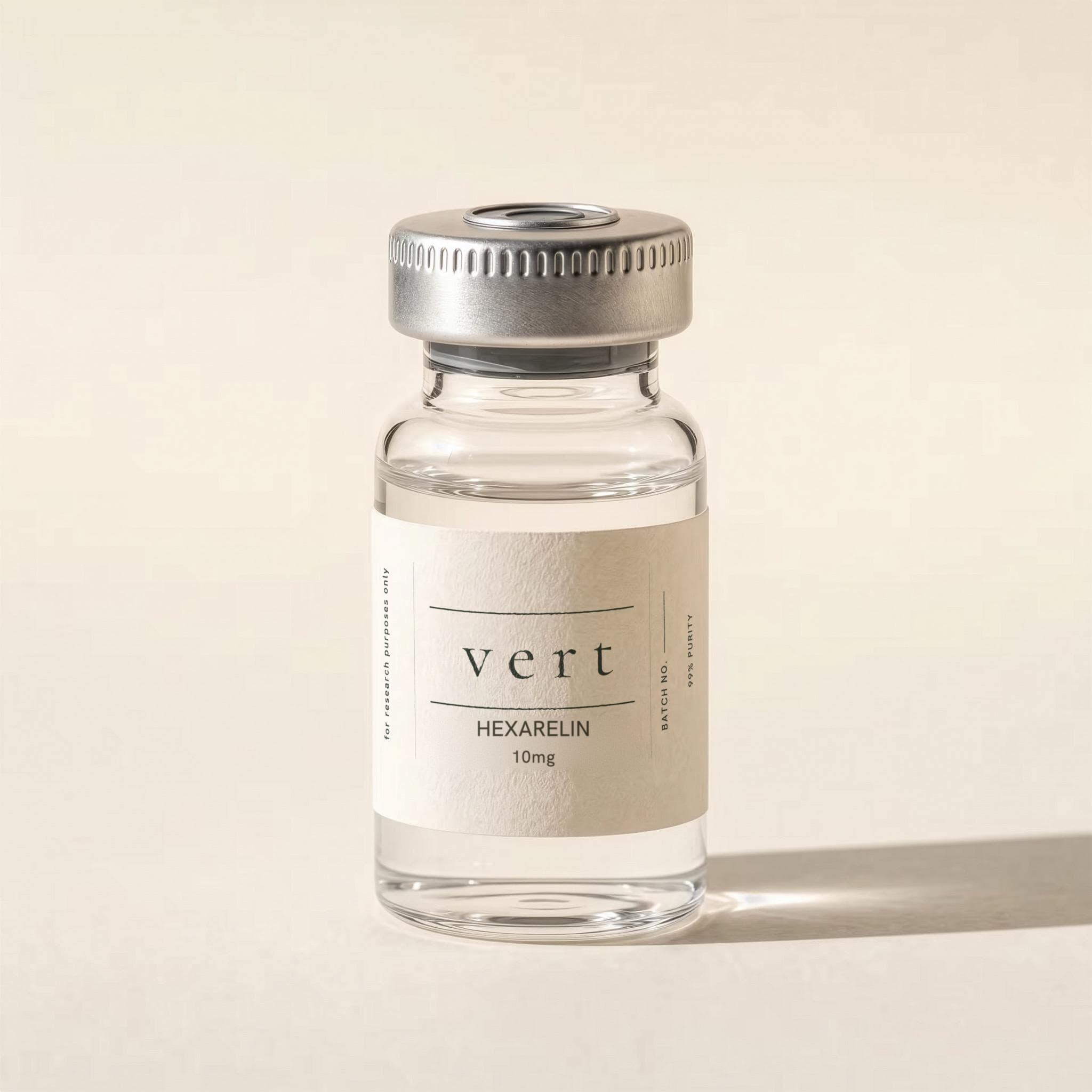
GHS-R1a agonist hexapeptide
Hexarelin is a synthetic hexapeptide catalogued as a GHS-R1a agonist, molecular formula C47H58N12O6 at approximately 887 g/mol, supplied as a white lyophilized reference material in a single 10mg vial with a published certificate of analysis.
Hexarelin is a synthetic hexapeptide, a chain of six amino acid residues, catalogued as a GHS-R1a agonist. Its molecular formula is C47H58N12O6: forty-seven carbon atoms, fifty-eight hydrogen, twelve nitrogen and six oxygen. Computed from standard atomic weights that formula gives 887.06 g/mol, which sits within rounding of the 887.0 held in the PubChem record, so the formula and the published mass describe the same species. The compound is filed in PubChem under CID 6918297, with InChIKey RVWNMGKSNGWLOL-GIIHNPQRSA-N, the hashed identifier that encodes the connectivity in its first block and the stereochemistry and protonation state in the blocks that follow. Nothing in the formula carries a counter-ion, so the 887 g/mol figure describes the peptide as named. Hexarelin has been investigated in laboratory research into growth hormone secretagogue receptor signaling; that is the pathway its mechanism class belongs to, and this page names it without going further. v e r t stocks hexarelin in one size, a 10mg vial. The material is a white lyophilized powder, the appearance stated on the certificate for this size, and it ships dry and sealed. It is not supplied as a solution, a suspension or any prepared formulation. Identity and purity are characterized by ultra-high-performance liquid chromatography with mass spectrometry, against a purity specification of greater than 98 percent. Storage is desiccated at 68°F (20°C), away from light and moisture.
>99% UPLC purity; identity confirmed by mass spectrometry. A Certificate of Analysis is published for each size, reporting that lot's identity and purity result. See our quality & COA page.
Supplied as a lyophilized reference material. Lyophilized reference materials are stored desiccated at 68°F (20°C), away from light and moisture. We do not provide reconstitution, preparation, or usage instructions of any kind.
Hexarelin is a synthetic hexapeptide, a chain of six amino acid residues, catalogued as a GHS-R1a agonist. Its molecular formula is C47H58N12O6 and its molecular weight is approximately 887 g/mol. v e r t stocks it as a white lyophilized reference material in a single 10mg vial, sold for laboratory research and educational purposes only.
The molecular formula is C47H58N12O6, which is forty-seven carbon atoms, fifty-eight hydrogen, twelve nitrogen and six oxygen. Worked against standard atomic weights that formula comes to 887.06 g/mol, and the PubChem record carries 887.0. The spread is rounding and the choice of atomic weight table, not a disagreement about which molecule is in the vial. One point worth stating plainly, because catalog listings for peptides often blur it: the formula contains no counter-ion, so 887 g/mol is the mass of the peptide as named rather than of a salt of it.
PubChem CID 6918297, and InChIKey RVWNMGKSNGWLOL-GIIHNPQRSA-N. Those are the two identifiers used on this page and the ones to check the compound against. The InChIKey is the more robust of the pair, because it is derived from the structure itself rather than assigned by a registry: its first block encodes the connectivity, and the blocks that follow encode stereochemistry and protonation state. A catalog number is a pointer to a record; the key is a fingerprint of the molecule.
A certificate is published for the 10mg size at /coa/hexarelin-10mg.pdf. It states the lot, the identity, the appearance as a white lyophilized powder, the molecular formula, the molecular weight, a purity specification of greater than 98 percent, and the analytical data plates behind the figures. Two methods are doing two different jobs. Mass spectrometry establishes identity. Chromatography establishes chromatographic purity, which is a relative figure and not an assay of absolute content. What the document does not state is as important as what it does. It carries no water or moisture content, no residual solvent, no counter-ion or salt content, no peptide content by nitrogen determination, no endotoxin figure and no bioburden figure. Anything absent from the certificate is not certified by it, and a lot is described by its own certificate rather than by a figure carried over from another lot.
The certificates published by v e r t state ultra-high-performance liquid chromatography with mass spectrometry. The number the method produces is an area-percent figure: the integrated area of the main peak divided by the total integrated peak area at the detection wavelength. It measures how much of the chromatographically resolved material is the named species, and it says nothing about water, salt, residual solvent, or any component that does not retain on the column or absorb at that wavelength. The specification is the standing requirement, greater than 98 percent, which every lot has to clear to be released. It is a threshold rather than a measurement, and it is the figure this page cites, because a specification holds across lots and a single lot's measurement does not.
Hexarelin ships in one size, a 10mg vial, as a white lyophilized powder in a sealed container. Lyophilization removes water by sublimation from the frozen state under reduced pressure, which is why the material presents as a light cake or powder rather than a compacted solid, and why it is sensitive to atmospheric moisture once a container is opened. It is supplied dry. It is not a solution, a suspension, a premixed blend or any prepared formulation, and v e r t publishes no preparation guidance of any kind. Storage is desiccated at 68°F (20°C), away from light and moisture.
FOR RESEARCH & EDUCATIONAL PURPOSES ONLY