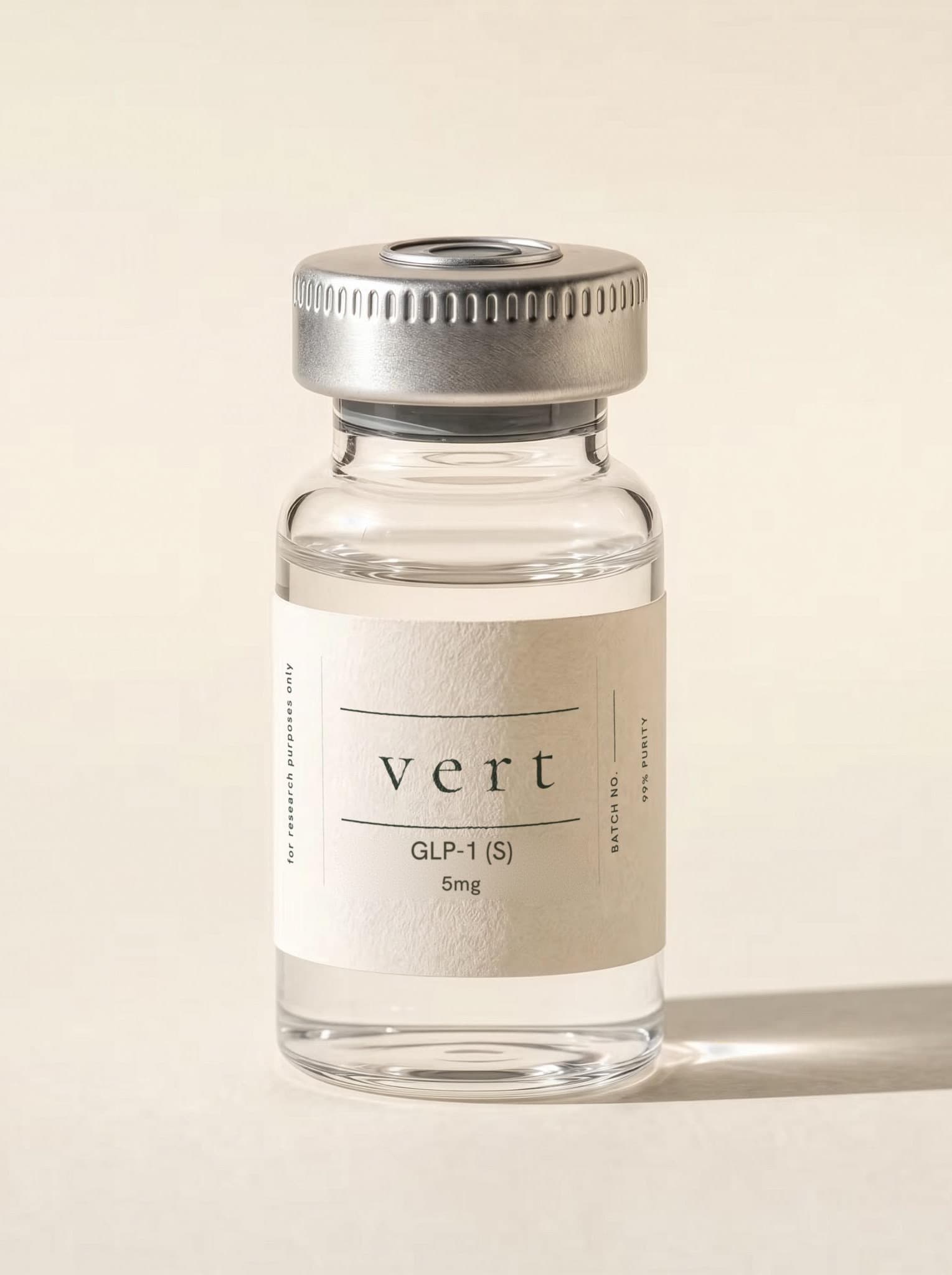
glp-1 (s)
GLP-1 receptor agonist
Research Use Only
from$119.95
All products are sold for research purposes only. We do not provide any guidance for personal use.
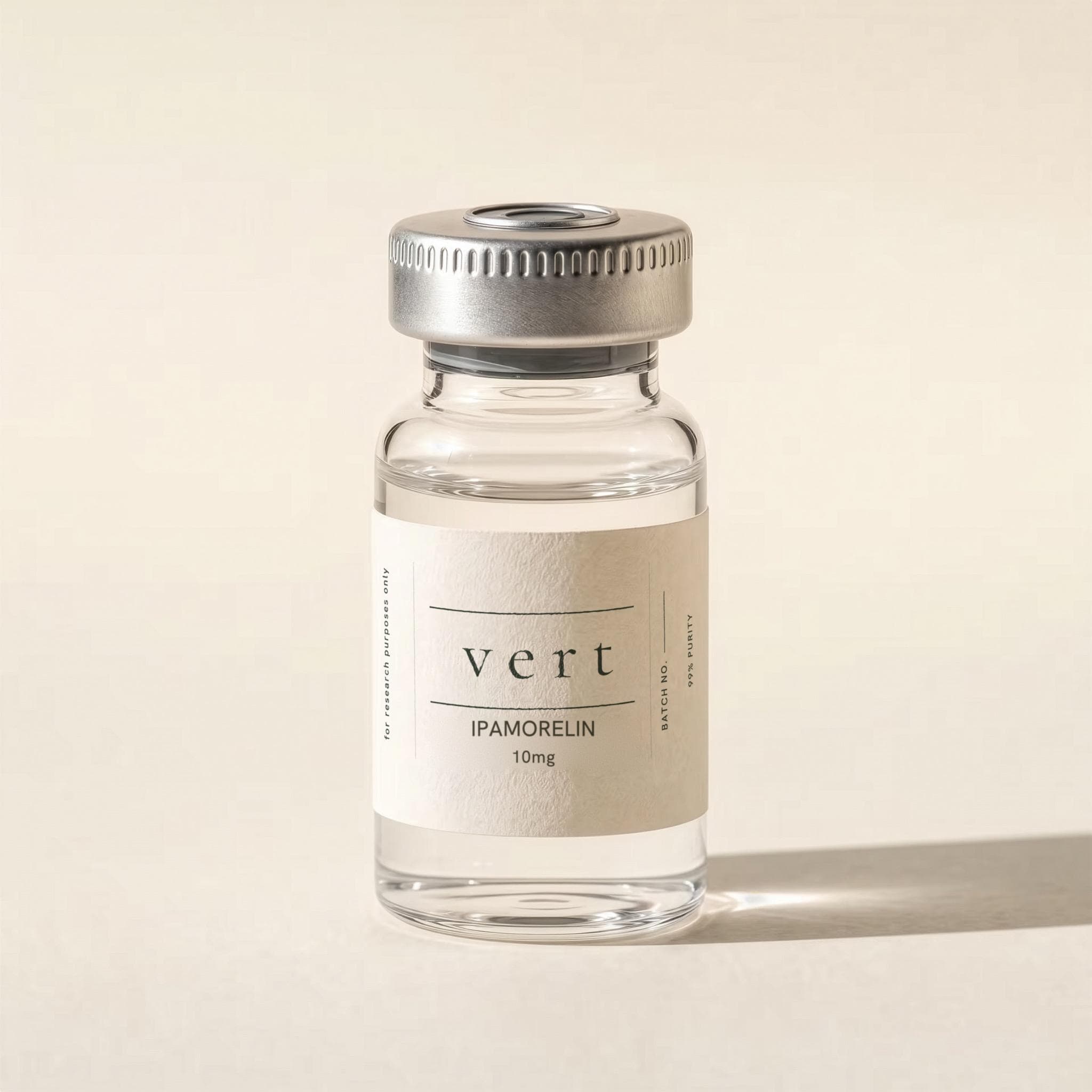
Selective ghrelin receptor agonist
Ipamorelin is a synthetic research compound classed as a selective ghrelin receptor agonist, molecular formula C38H49N9O5 at 711.9 g/mol, supplied as a lyophilized reference material in a single 10mg size with a published certificate of analysis.
Ipamorelin is supplied as a laboratory reference material and is classed as a selective ghrelin receptor agonist. Its molecular formula is C38H49N9O5 at a molecular weight of 711.9 g/mol, filed in PubChem under CID 9831659 with InChIKey NEHWBYHLYZGBNO-BVEPWEIPSA-N. That formula and that mass reconcile against each other exactly. Taking standard atomic weights, thirty-eight carbon at 456.418, forty-nine hydrogen at 49.392, nine nitrogen at 126.063 and five oxygen at 79.995 sum to 711.87 g/mol, which rounds to the 711.9 published above. A mass quoted for this compound that does not close against C38H49N9O5 is describing something other than this molecule. Investigated in laboratory research into ghrelin receptor signaling. Supplied as a lyophilized reference material in a single 10mg size; identity and purity characterized by ultra-high-performance liquid chromatography with mass spectrometry against a specification of 98 percent minimum. It is not supplied as a solution, a suspension, or any other prepared formulation.
>99% UPLC purity; identity confirmed by mass spectrometry. A Certificate of Analysis is published for each size, reporting that lot's identity and purity result. See our quality & COA page.
Supplied as a lyophilized reference material. Lyophilized reference materials are stored desiccated at 68°F (20°C), away from light and moisture. We do not provide reconstitution, preparation, or usage instructions of any kind.
Ipamorelin is a synthetic compound supplied as a laboratory reference material, and the class term that describes it is selective ghrelin receptor agonist. The word selective in that phrase is a statement about receptor binding: it places the compound at the ghrelin receptor rather than distributing it across additional receptor targets. It is not a statement about what the compound produces in any living system, and this page makes no such statement. Everything else on this page is identity and analytics, meaning the formula, the mass, the database identifiers, the physical form and what the certificate does and does not certify.
The molecular formula is C38H49N9O5 and the molecular weight is 711.9 g/mol. The compound is filed in PubChem under CID 9831659, with InChIKey NEHWBYHLYZGBNO-BVEPWEIPSA-N. The mass is internally consistent with the formula, and it is worth showing the arithmetic rather than asking anyone to take it on trust. Using standard atomic weights, carbon contributes 456.418, hydrogen 49.392, nitrogen 126.063 and oxygen 79.995, and those four terms sum to 711.87 g/mol, which is the 711.9 printed on the certificate. A listing that pairs this formula with a materially different mass, or this mass with a different formula, has one of the two wrong.
Three identifiers do three different jobs and none of them substitutes for another. The InChIKey, NEHWBYHLYZGBNO-BVEPWEIPSA-N, is a hashed fingerprint computed from a chemical structure, so two records that agree on it agree on the structure they describe. PubChem CID 9831659 is not a chemical identifier at all but a database record number, which makes it exactly as reliable as the record behind it and means it cannot be recomputed from a structure the way an InChIKey can. The molecular formula C38H49N9O5 is a composition, and compositions are shared by more than one structure, so a formula match alone is the weakest of the three. All three describe the named species rather than the material in front of you. The lot-level check is the mass spectrometry plate on the certificate, where an observed molecular ion is compared against the mass expected for C38H49N9O5. Identifiers describe the compound; only the certificate describes the vial.
A certificate is published for the 10mg size at /coa/ipamorelin-10mg.pdf. The analysis is qualitative and quantitative chemical characterization by ultra-high-performance liquid chromatography with mass spectrometry, run against a purity specification of 98 percent minimum, and the appearance is recorded as white lyophilized powder. The two headline figures answer different questions. Mass spectrometry establishes identity, comparing an observed molecular ion against the mass expected for the named species. Chromatographic purity is an area-percent figure: the integrated area of the main peak divided by the total integrated peak area at the detection wavelength. That is a relative measure of chromatographically resolved organic impurities, not an assay of absolute content. It does not account for water, for residual solvent, for counter-ion mass, or for any species that neither retains on the column nor absorbs at the detection wavelength. A purity certificate of this kind does not report water or moisture content, residual solvent, peptide content by nitrogen determination, endotoxin or bioburden. Anything the document does not state is not certified by it. The specification is also the figure to quote rather than any single measured number: a specification is the floor every lot has to clear, while a measurement belongs to one lot and to no other, and this page will outlive the lot on the shelf today.
Ipamorelin ships as a dry lyophilized reference material in a sealed vial, in one size only, 10mg. There is no second size and no size selector on this page. Lyophilization is freeze-drying: the material is frozen and the water is drawn off by sublimation under reduced pressure, which leaves a porous cake or a loose powder rather than a compacted solid. The certificate records the appearance as white lyophilized powder. It is not supplied as a solution, a suspension, a cream, or any other prepared formulation, and this page carries no preparation guidance of any kind.
v e r t states storage desiccated at 68°F (20°C), away from light and moisture. The desiccant and an intact seal are doing real work rather than sitting there as packaging, because a lyophilized cake presents a very large surface area for its mass and is correspondingly ready to take up atmospheric water. Light exclusion is the ordinary precaution for a dry organic reference material. The temperature figure is the condition v e r t states for this material, and it is the figure to follow rather than a number carried across from another supplier's label.
FOR RESEARCH & EDUCATIONAL PURPOSES ONLY