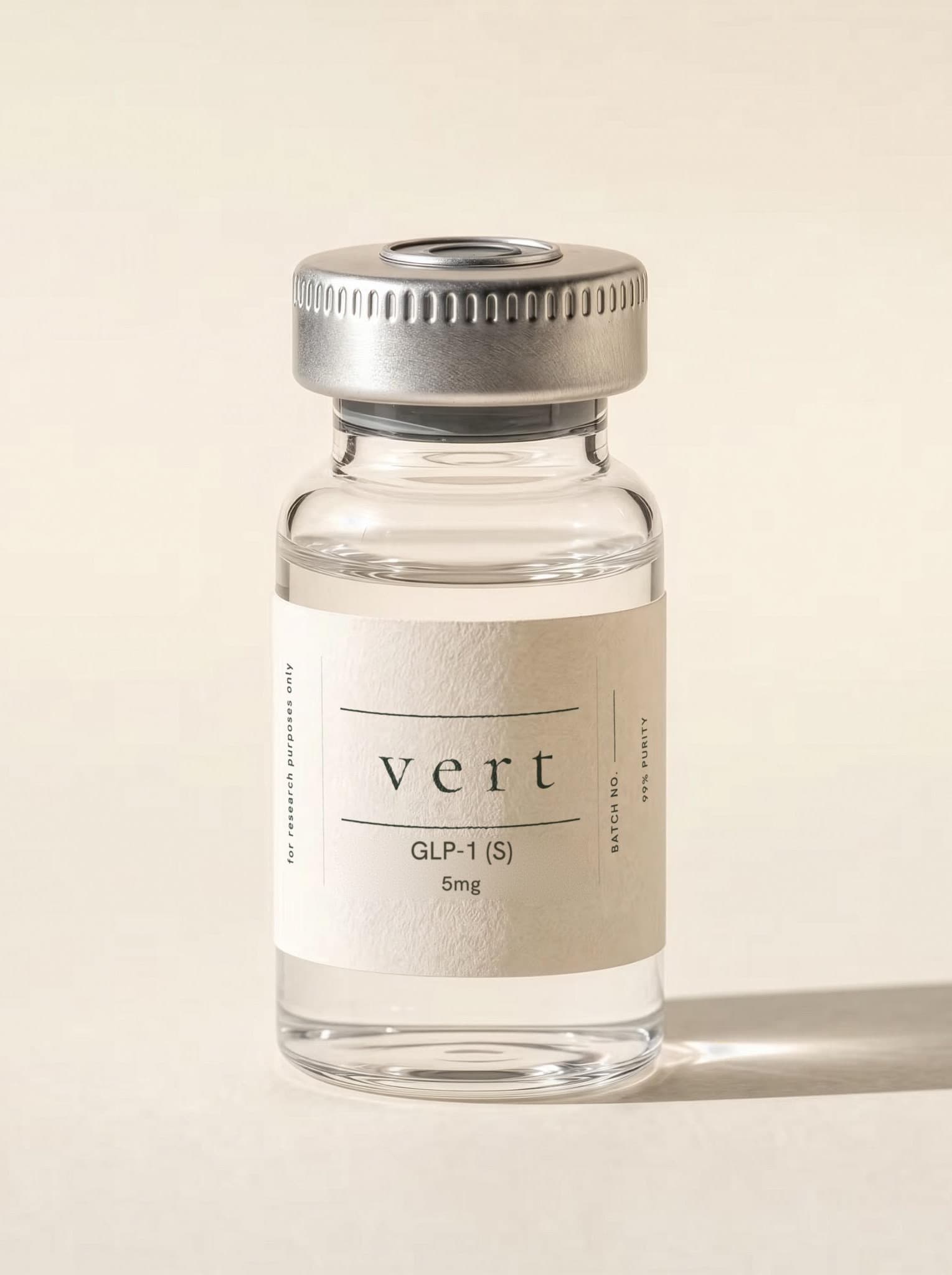
glp-1 (s)
GLP-1 receptor agonist
Research Use Only
from$119.95
All products are sold for research purposes only. We do not provide any guidance for personal use.
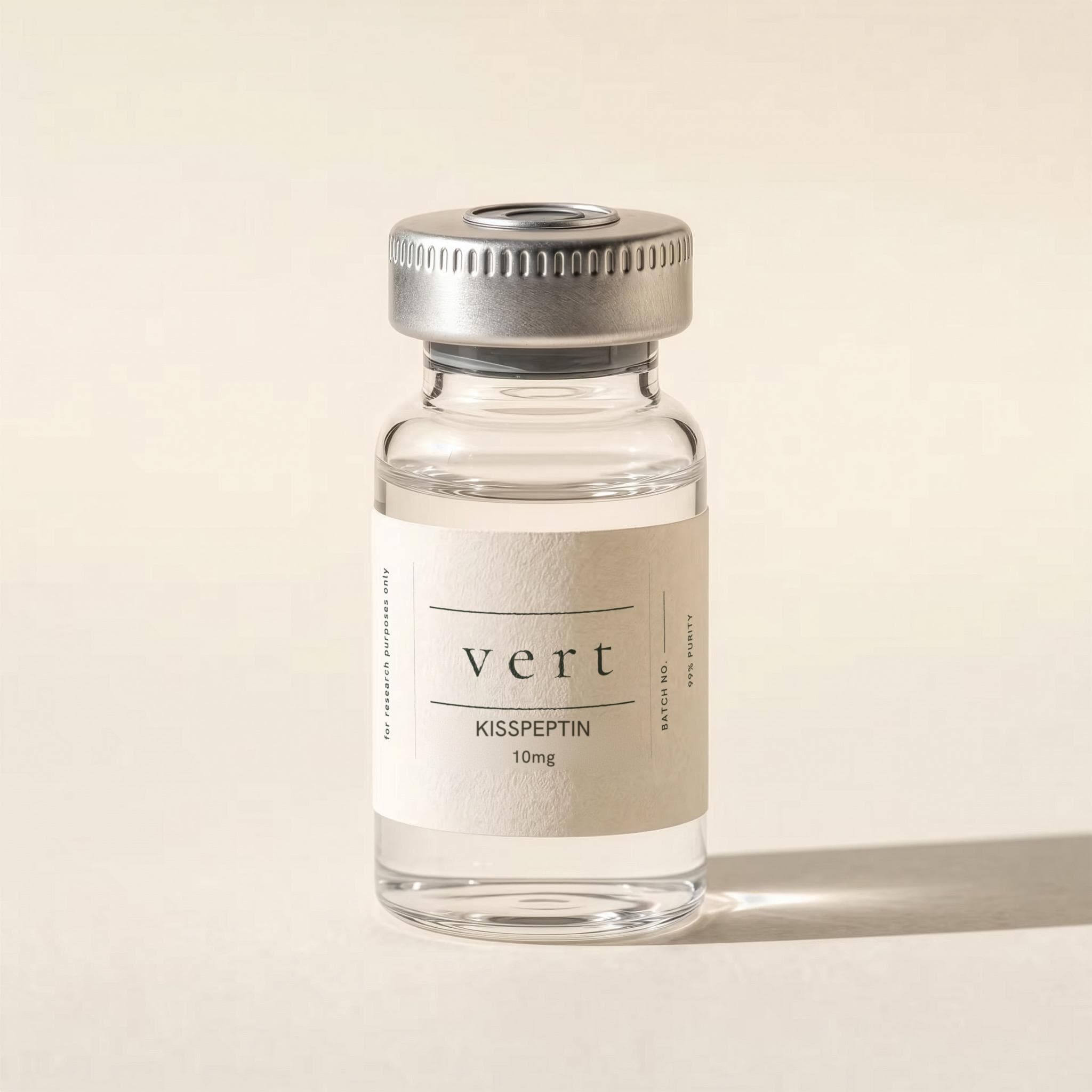
KISS1-derived neuropeptide, KISS1R (GPR54) ligand
Kisspeptin-10 is the KISS1-derived neuropeptide filed under PubChem CID 25240297, a ligand at the KISS1R receptor (GPR54), supplied as a lyophilized reference material in a single 10mg vial with a published certificate of analysis.
Kisspeptin-10 is a KISS1-derived neuropeptide and a ligand at the KISS1R receptor, also designated GPR54. The structure supplied here is filed in PubChem as CID 25240297 with molecular formula C63H83N17O14, molecular weight 1302.4 g/mol, and InChIKey RITKWYDZSSQNJI-INXYWQKQSA-N. The certificate published for this vial prints the same molecular formula at approximately 1302.49 g/mol. The numeral in the name is a residue count rather than a grade, a lot marker or a fill size, which matters because the kisspeptin family shares a stem name across fragments of different lengths. The formula and the mass check against each other. Recomputing C63H83N17O14 from standard atomic weights gives 1302.46 g/mol: carbon 756.69, hydrogen 83.66, nitrogen 238.12 and oxygen 223.99. That figure sits between the 1302.4 on the PubChem record and the approximately 1302.49 on the certificate, and the difference at the second decimal place comes from which set of atomic weights a source rounds against, not from a different molecule. Every identifier printed on this page is sourced to the PubChem record for this structure rather than to a third-party catalog listing. Investigated in laboratory research into KISS1R (GPR54) receptor-binding pathways. Supplied as a lyophilized reference material in a single 10mg vial; identity and purity characterized by ultra-high-performance liquid chromatography with mass spectrometry against a specification of 98 percent minimum. It is not supplied as a solution, a suspension, or any other prepared formulation.
>99% UPLC purity; identity confirmed by mass spectrometry. A Certificate of Analysis is published for each size, reporting that lot's identity and purity result. See our quality & COA page.
Supplied as a lyophilized reference material. Lyophilized reference materials are stored desiccated at 68°F (20°C), away from light and moisture. We do not provide reconstitution, preparation, or usage instructions of any kind.
Kisspeptin is a stem name shared across fragments derived from the KISS1 gene product, and those fragments are distinguished from one another by the residue count carried in the suffix. The material v e r t supplies is the ten-residue member, kisspeptin-10. The numeral is a residue count and nothing else: not a grade, not a lot number, not a fill size. Because the family shares a stem, a listing that reads only Kisspeptin is ambiguous on its own, and the molecular formula and the registry identifier are what pin down which species is actually in a vial. Ours is C63H83N17O14, filed in PubChem as CID 25240297 with InChIKey RITKWYDZSSQNJI-INXYWQKQSA-N.
The molecular formula is C63H83N17O14. The PubChem record for this structure, CID 25240297, carries a molecular weight of 1302.4 g/mol and InChIKey RITKWYDZSSQNJI-INXYWQKQSA-N. The certificate published for the 10mg vial prints the same formula at approximately 1302.49 g/mol. Those two figures are consistent rather than contradictory, and the formula itself settles it: summing standard atomic weights across sixty-three carbons at 756.69, eighty-three hydrogens at 83.66, seventeen nitrogens at 238.12 and fourteen oxygens at 223.99 gives 1302.46 g/mol, which sits between them. Differences at the second decimal place come from rounding conventions between sources. When cross-checking a listing against ours, compare the formula and the PubChem identifier first, then the mass. Every identifier on this page is taken from the PubChem record for the structure rather than from a catalog listing.
A certificate is published for this product at a fixed public path, /coa/kisspeptin-10mg.pdf. It states the analytical method as qualitative and quantitative chemical analysis by ultra-high-performance liquid chromatography with mass spectrometry, against a purity specification of 98 percent minimum. The two halves of that method answer different questions. Mass spectrometry establishes identity, by matching an observed molecular ion against the expected mass of the named species. Chromatographic purity is an area-percent figure, the integrated area of the main peak divided by the total integrated peak area at the detection wavelength, and it is a relative measure of chromatographically resolved organic impurities rather than an assay of absolute content. Area-percent does not account for water, residual solvent, counter-ion mass, or any species that neither retains on the column nor absorbs at the detection wavelength. Anything the document does not state is not certified by it.
Laboratory research on this compound has been framed around binding at KISS1R, the receptor also designated GPR54. That is the receptor system named in the reference-material register for this compound, and it is named here as a receptor designation and a research context, not as anything the compound is claimed to produce. v e r t supplies this material as a reference standard for laboratory work and publishes identity and purity data for it. It does not publish research findings, and nothing on this page should be read as one.
Kisspeptin-10 ships as a dry lyophilized reference material in a single sealed 10mg vial. Lyophilization is freeze-drying, water removed by sublimation from the frozen state under reduced pressure, which leaves a porous cake or powder rather than a compacted solid. The certificate records the appearance as a white lyophilized powder. It is not supplied as a solution, a suspension, or any other prepared formulation. Storage is specified desiccated at 68°F (20°C), away from light and moisture; the desiccation matters because a lyophilized cake is hygroscopic and picks up atmospheric water, which is the same water an area-percent purity figure does not measure.
FOR RESEARCH & EDUCATIONAL PURPOSES ONLY