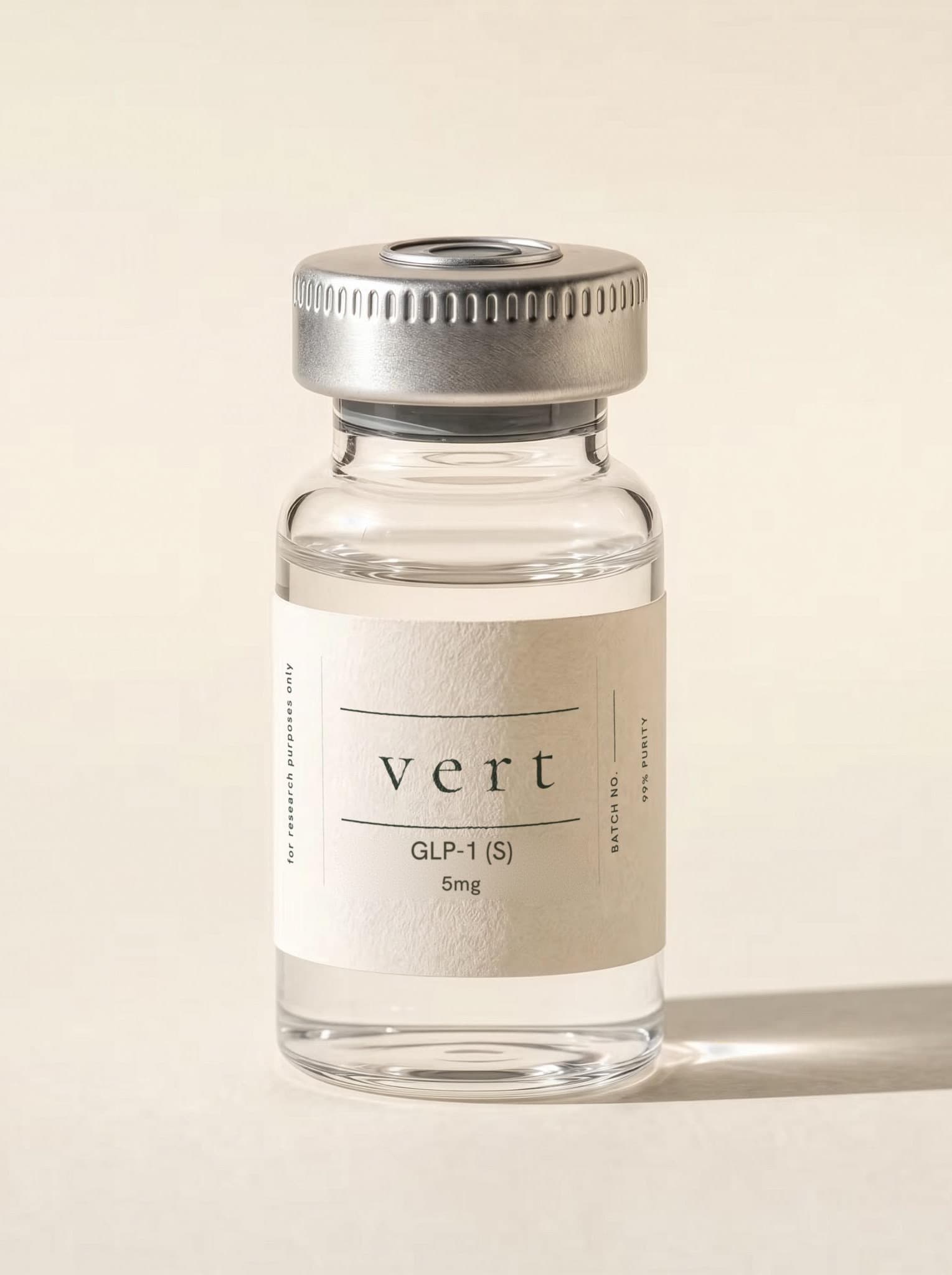
glp-1 (s)
GLP-1 receptor agonist
Research Use Only
from$119.95
All products are sold for research purposes only. We do not provide any guidance for personal use.
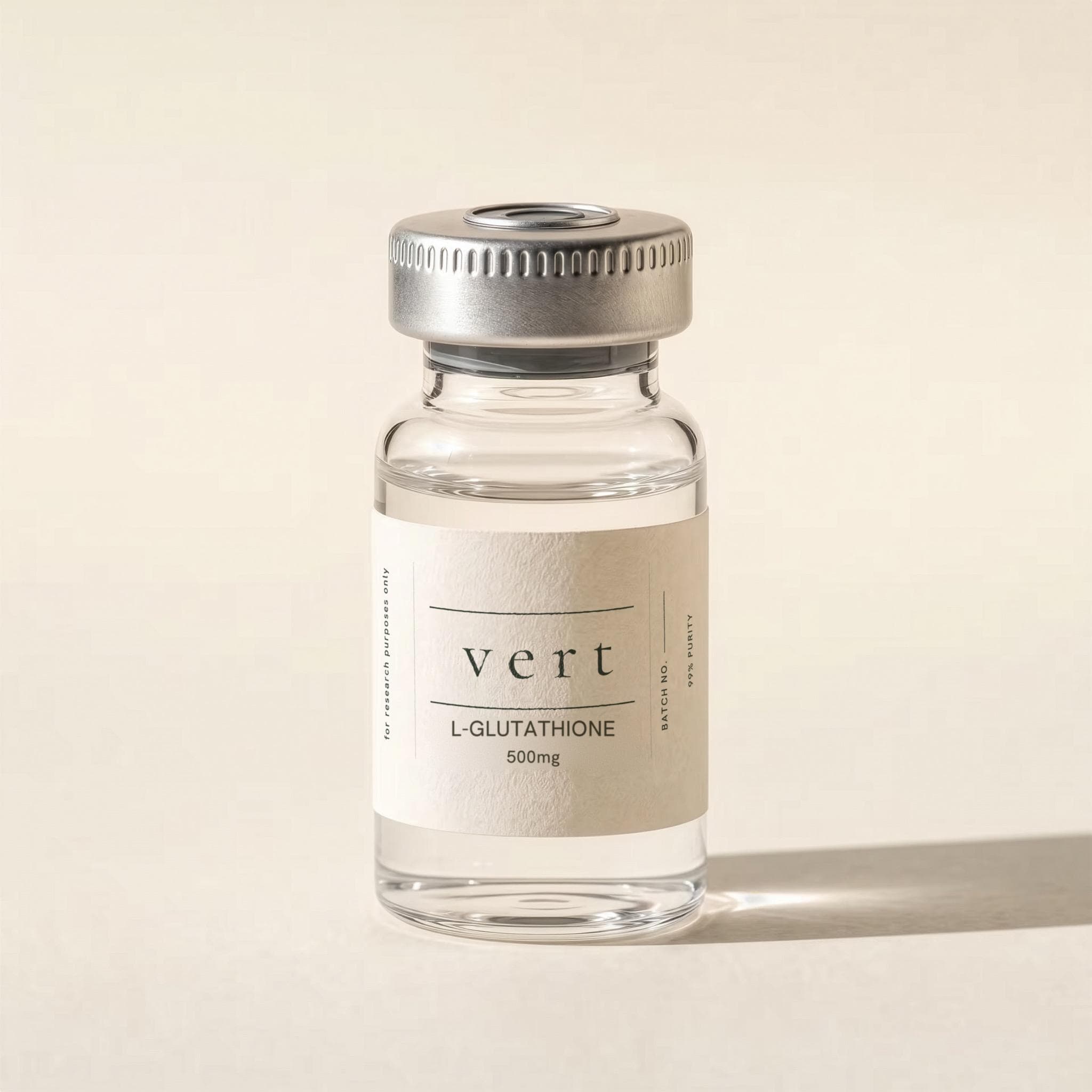
Thiol tripeptide, gamma-glutamyl-cysteinyl-glycine
L-Glutathione is the reduced thiol tripeptide gamma-glutamyl-cysteinyl-glycine, CAS 70-18-8, supplied as a white lyophilized reference material in a single 500mg size with a published certificate of analysis.
L-Glutathione is the reduced form of the thiol tripeptide gamma-glutamyl-cysteinyl-glycine, abbreviated GSH. Its identity block is molecular formula C10H17N3O6S, molecular weight 307.33 g/mol, CAS registry number 70-18-8, PubChem CID 124886, InChIKey RWSXRVCMGQZWBV-WDSKDSINSA-N. That formula accounts for the structure atom by atom: ten carbons split five to glutamate, three to cysteine and two to glycine; three nitrogens, being the N-terminal amine and the two amide nitrogens of the backbone; six oxygens, being two free carboxyl groups and two amide carbonyls; and one sulfur, the single cysteine thiol that puts the molecule in its class. What separates glutathione from an ordinary tripeptide is where its first bond is made. Glutamate is joined to cysteine through the side-chain gamma-carboxyl rather than the alpha-carboxyl, so that linkage is an isopeptide bond and the glutamate alpha-carboxyl is left free. Written as a sequence it is gamma-Glu-Cys-Gly, not Glu-Cys-Gly, and the difference is chemical rather than notational: the two strings describe different molecules built from the same three residues. The cysteine thiol is the reactive center of the molecule and the reason this material is handled as a redox-active reference standard rather than an inert peptide standard. Reduced and oxidized glutathione are two different chemical species. The oxidized form, glutathione disulfide or GSSG, is the dimer formed when the thiols of two GSH molecules are joined through a disulfide bond; it carries its own formula, its own mass and its own registry entry, and none of the figures on this page describe it. What ships under this listing is the reduced form. Investigated in laboratory research into thiol redox chemistry. Separately from that work, reduced glutathione is an ordinary bench reagent: it is the competitive elution ligand in glutathione-affinity chromatography, one half of the redox pairs used to shuffle disulfides during protein refolding, and a thiol reference standard in colorimetric and chromatographic thiol determinations. Supplied as a white lyophilized powder in a single 500mg size. Identity and purity are characterized by ultra-high-performance liquid chromatography with mass spectrometry against a specification of 98 percent minimum, and a certificate of analysis is published for the size. It is not supplied as a solution, a cream, a serum, or any other prepared formulation.
>98% UPLC purity; identity confirmed by mass spectrometry. A Certificate of Analysis is published for each size, reporting that lot's identity and purity result. See our quality & COA page.
Supplied as a lyophilized reference material. Lyophilized reference materials are stored desiccated at 68°F (20°C), away from light and moisture. We do not provide reconstitution, preparation, or usage instructions of any kind.
L-Glutathione is a tripeptide of glutamate, cysteine and glycine, written gamma-Glu-Cys-Gly and abbreviated GSH in its reduced form. The gamma prefix is the whole point of the molecule. In a standard peptide the backbone is built from alpha-carboxyl to alpha-amino; here the glutamate contributes its side-chain gamma-carboxyl instead, so the bond to cysteine is an isopeptide bond and the glutamate alpha-carboxyl stays free as a second unbonded acid group. That is why the sequence must be written gamma-Glu-Cys-Gly and never Glu-Cys-Gly: the two describe different molecules built from the same three residues. The remaining bond, between cysteine and glycine, is a conventional alpha-peptide bond. The cysteine sulfhydryl is the reactive center, which is what makes the compound a redox-active reference material rather than an inert peptide standard, and it is also why the dry state and the exclusion of moisture matter more here than for a peptide carrying no reactive thiol.
They are two distinct chemical species and the figures for one do not apply to the other. Reduced glutathione carries a free cysteine sulfhydryl group and is the form abbreviated GSH; it is the form supplied under this listing, and every figure on this page describes it. Oxidized glutathione, GSSG or glutathione disulfide, is the dimer produced when the thiols of two GSH molecules join through a sulfur-sulfur bond on oxidation; it has its own molecular formula, its own mass, its own registry number and its own database record, none of which appear on this page. Because the two interconvert, laboratory work usually cares about which one is in the vial and in what proportion, and a chromatographic purity figure alone does not resolve that question unless the two species separate and both respond at the detection wavelength. When comparing a listing, a catalog entry or a certificate against this page, check first which redox form the number belongs to. Quoting a figure for one redox form against a lot of the other is the most common identity error on this compound.
By ultra-high-performance liquid chromatography with mass spectrometry, against a purity specification of 98 percent minimum. The two techniques answer two different questions. Mass spectrometry establishes identity, by matching the observed molecular ion against the mass expected for the named species. Chromatographic purity is an area-percent figure: the integrated area of the main peak divided by the total integrated peak area at the detection wavelength, which is a relative measure of chromatographically resolved organic impurities rather than an assay of absolute content by mass. Area-percent does not account for water, residual solvent, counter-ion mass, or any species that neither retains on the column nor absorbs at the detection wavelength. A material can pass one test and not the other, which is why the certificate carries both.
A certificate is published for the single 500mg size at a fixed public path, /coa/l-glutathione-500mg.pdf. It states the identity of the material, its appearance as a white lyophilized powder, the purity specification of 98 percent minimum, and that lot's own mass spectrometry and chromatography plates, which are generated per lot rather than templated. What the document does not report is as important as what it does. It carries no water or moisture determination, no residual-solvent figure, no free-thiol or sulfhydryl assay, no separate quantitation of oxidized glutathione, no peptide content by nitrogen determination, and no endotoxin or bioburden testing. Anything absent from the certificate is not certified by it. Read the certificate published here rather than a third-party catalog listing for the figures that describe the material in the vial.
Reduced glutathione is a routine bench reagent. In protein purification it is the competitive elution ligand of glutathione-affinity chromatography: a tagged fusion protein binds an immobilized glutathione resin and is then displaced by free reduced glutathione in the running buffer, which is one of the standard tag systems in recombinant protein work. In protein refolding it is one half of a redox pair used to set the conditions under which disulfide bonds shuffle toward their correct pairing. In analytical work it is a thiol reference standard for colorimetric sulfhydryl determinations and for chromatographic thiol methods. It is also widely used as a capping and stabilizing ligand for metal nanoparticles, where the thiolate sulfur binds the metal surface and the free carboxyl and amine groups face outward. v e r t supplies the material and does not provide protocols, preparation guidance, or usage instructions of any kind.
FOR RESEARCH & EDUCATIONAL PURPOSES ONLY