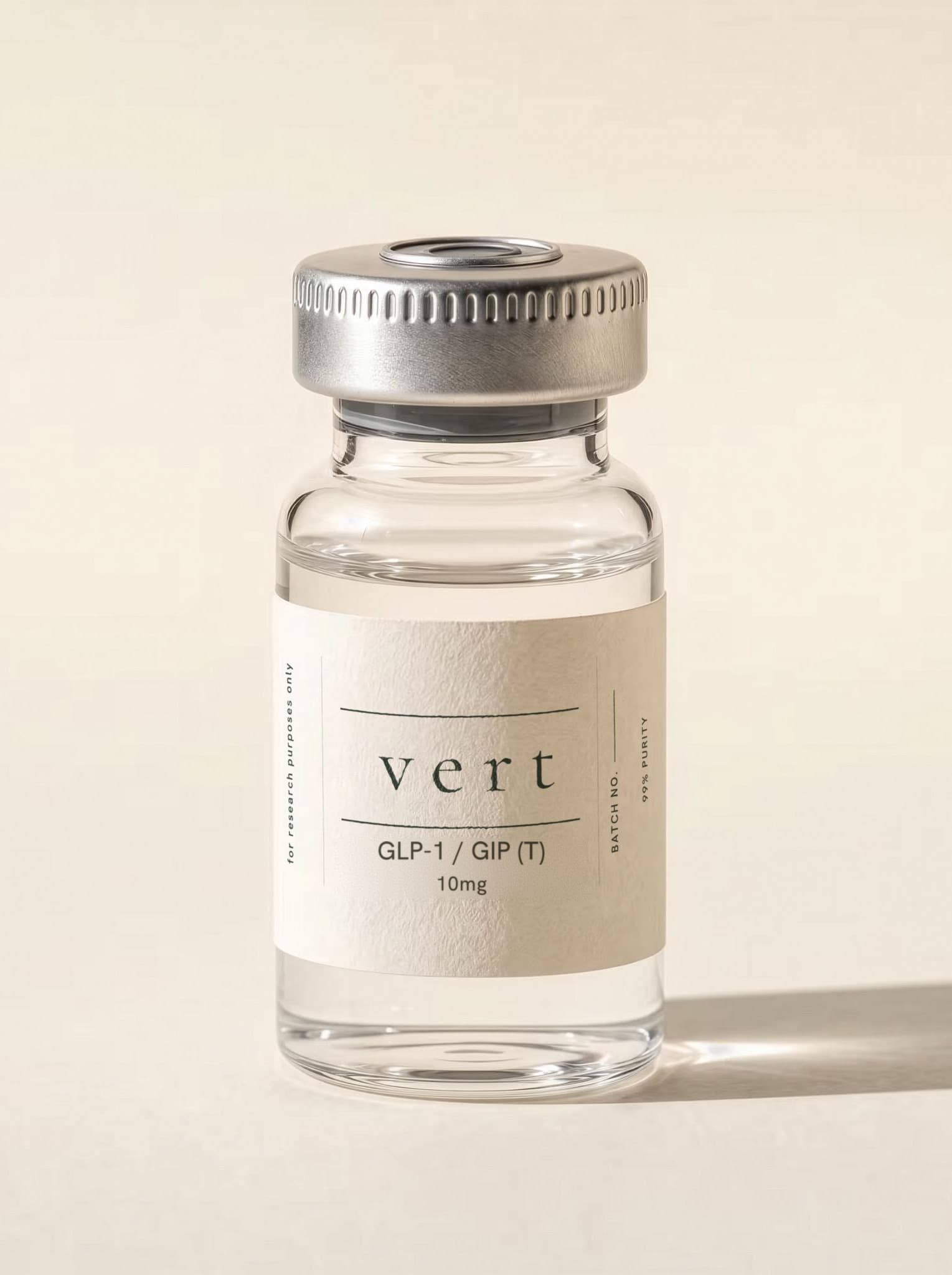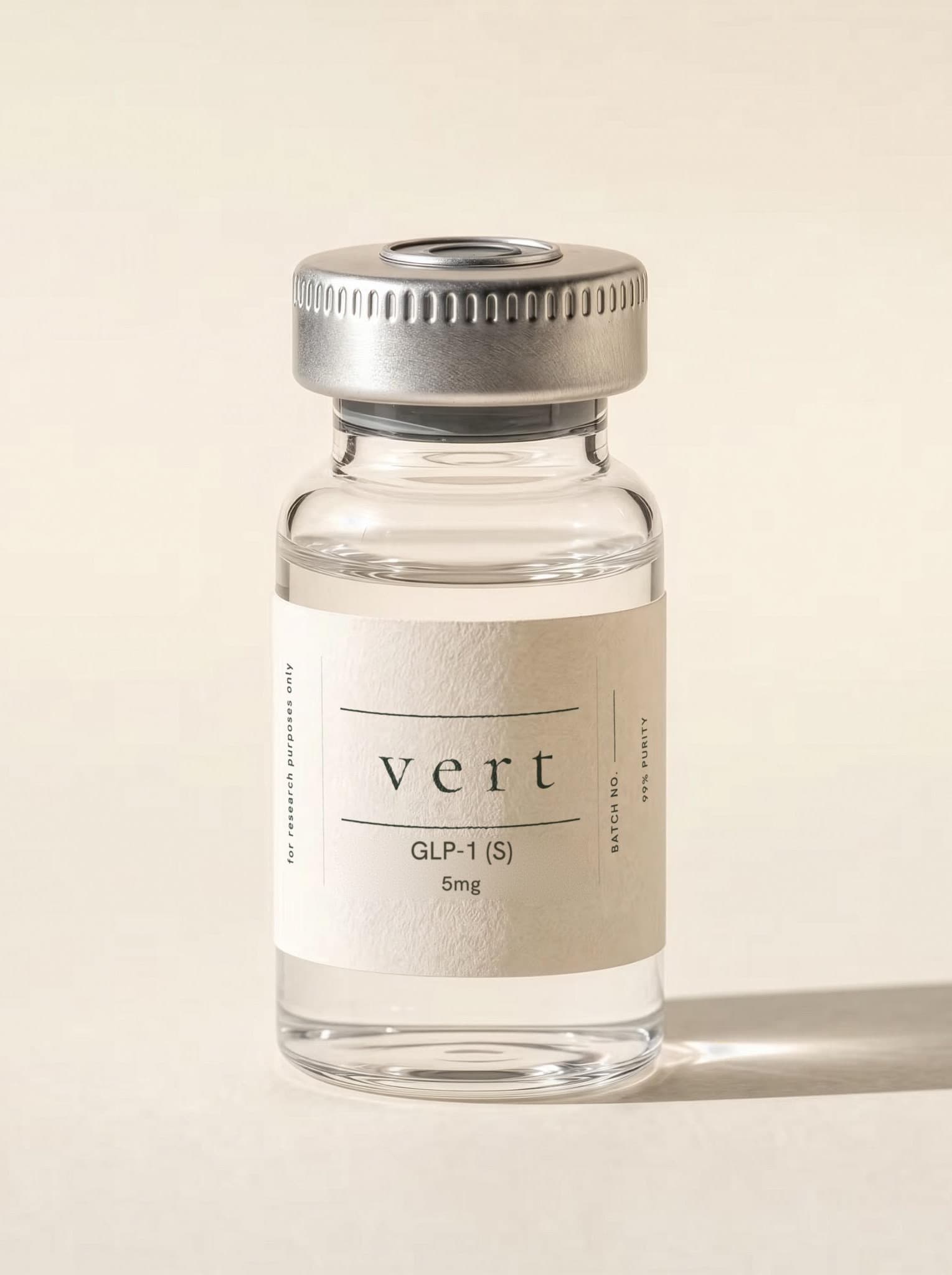
glp-1 (s)
GLP-1 receptor agonist
Research Use Only
from$119.95
All products are sold for research purposes only. We do not provide any guidance for personal use.
Nicotinamide adenine dinucleotide
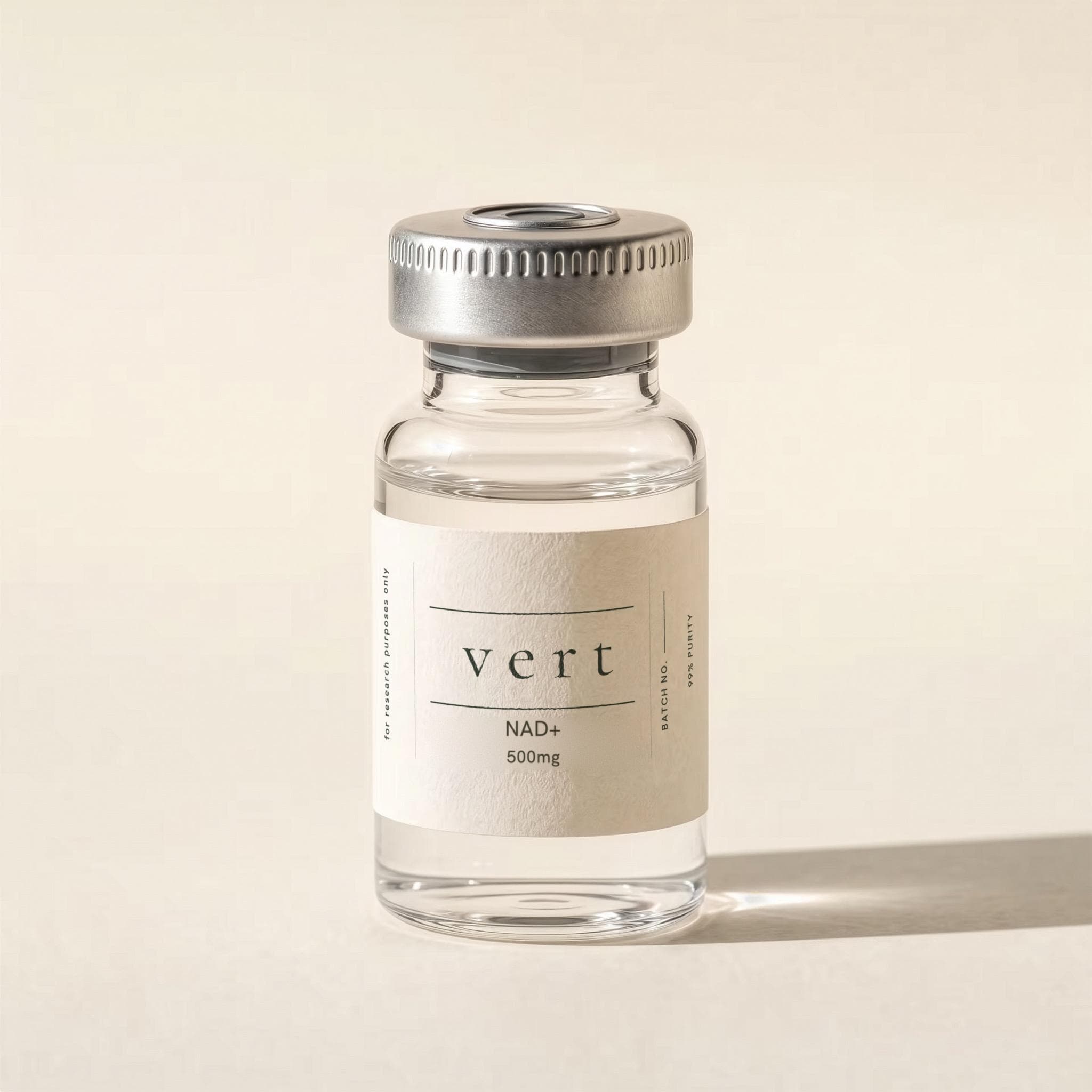
NAD+, the oxidized form of nicotinamide adenine dinucleotide, is a dinucleotide rather than a peptide, supplied as a white lyophilized reference material in 500mg and 1000mg vials with a published certificate of analysis for each size.
NAD+ is nicotinamide adenine dinucleotide in its oxidized form. It is not a peptide, and it has no sequence to quote. Where a peptide is a chain of amino acid residues joined by amide bonds, NAD+ is two nucleotide units joined end to end, one carrying adenine and one carrying nicotinamide, linked through a pyrophosphate bridge. That is what the word dinucleotide in the name records, and it is why the identity data on this page is registry and formula data rather than residue data. The molecular formula carried for this compound is C21H27N7O14P2 at a molecular weight of approximately 663.4 g/mol, filed under PubChem CID 5892 with InChIKey BAWFJGJZGIEFAR-NNYOXOHSSA-N. Formula and mass reconcile against each other exactly on standard atomic weights: carbon 252.231, hydrogen 27.216, nitrogen 98.049, oxygen 223.986 and phosphorus 61.948 sum to 663.43, which is the 663.4 g/mol figure to the precision it is quoted at. Supplied as a white lyophilized reference material in 500mg and 1000mg vials, with a certificate published for each size at a fixed public path. Identity and purity are characterized by ultra-high-performance liquid chromatography with mass spectrometry, against a purity specification of 98 percent minimum. It is not supplied as a solution, a suspension, or any other prepared formulation.
>99% UPLC purity; identity confirmed by mass spectrometry. A Certificate of Analysis is published for each size, reporting that lot's identity and purity result. See our quality & COA page.
Supplied as a lyophilized reference material. Lyophilized reference materials are stored desiccated at 68°F (20°C), away from light and moisture. We do not provide reconstitution, preparation, or usage instructions of any kind.
No. NAD+ is a dinucleotide and it has no peptide backbone, no amino acid residues and no sequence. The confusion is an artifact of where it is usually stocked rather than of its chemistry: it sits alongside peptides in research-material catalogs, so the vocabulary of peptide listings gets applied to it. Structurally it is two nucleotide units joined end to end, one carrying adenine and one carrying nicotinamide, with the two phosphates joined to each other to form a pyrophosphate bridge. Everything that follows from that difference is practical. There is no sequence to quote on this page, the identity data is registry and formula data rather than residue data, and the vial masses are 500mg and 1000mg rather than the single-digit milligram formats a peptide reference material usually ships in.
The molecular formula is C21H27N7O14P2 at a molecular weight of approximately 663.4 g/mol, filed under PubChem CID 5892 with InChIKey BAWFJGJZGIEFAR-NNYOXOHSSA-N. That mass is internally consistent with the formula it sits beside, and the arithmetic is worth showing because a transposed formula is easier to catch this way than by eye. On standard atomic weights, carbon 21 at 12.011 gives 252.231, hydrogen 27 at 1.008 gives 27.216, nitrogen 7 at 14.007 gives 98.049, oxygen 14 at 15.999 gives 223.986, and phosphorus 2 at 30.974 gives 61.948. Those five sum to 663.43, which is 663.4 g/mol at the precision the figure is quoted at. If a listing shows this formula against a materially different mass, one of the two has been mistyped.
It is a charge on one atom, not a net charge on the molecule. Nicotinamide is attached to its ribose through the pyridine ring nitrogen, which makes that nitrogen quaternary and positively charged, and the name records that single atom rather than the species as a whole. This is why the plus sign can sit in the name while the molecular formula on the certificate is written without a charge on it. It is a nomenclature convention, and reading it as a net ionic charge is the most common way the name gets misread.
A certificate is published for each size at a fixed public path, /coa/nad-plus-500mg.pdf and /coa/nad-plus-1000mg.pdf. The method printed on the document is qualitative and quantitative chemical analysis by ultra-high-performance liquid chromatography with mass spectrometry, against a specification of 98 percent minimum. The second page carries the data plates under the headings Mass Spectrometry and Ultra High Performance Liquid Chromatography. Read the two headline figures for what each one is. Mass spectrometry establishes identity, matching an observed molecular ion against the expected mass of the named compound. A chromatographic purity figure is an area-percent measure, the integrated area of the main peak over the total integrated peak area, so it describes chromatographically resolved organic impurities relative to each other. It is not an assay of absolute content, and it does not account for water, residual solvent, or any species that neither retains on the column nor is detected by the method. The document reports the identity, appearance and purity of the material alongside those analytical plates. It does not report water or moisture content, residual solvent, endotoxin, or bioburden. Whatever is absent from the document is not certified by it, and the published specification, not any single figure printed against a lot, is what the material is sold against.
NAD+ ships as a dry lyophilized reference material in a sealed vial, in two sizes, 500mg and 1000mg. The certificate states the appearance as White Lyophilized Powder, which is a useful identity check against the document on arrival, since a colored or clumped cake is not what the certificate describes. Lyophilization is freeze-drying, water removed by sublimation from the frozen state under reduced pressure, which is what leaves the porous cake or loose powder in the vial rather than a fused pellet. Lyophilized reference materials are stored desiccated at 68°F (20°C), away from light and moisture. It is not supplied as a solution, a suspension, or any other prepared formulation, and v e r t provides no preparation or handling instructions of any kind. A certificate is published for each size.
FOR RESEARCH & EDUCATIONAL PURPOSES ONLY