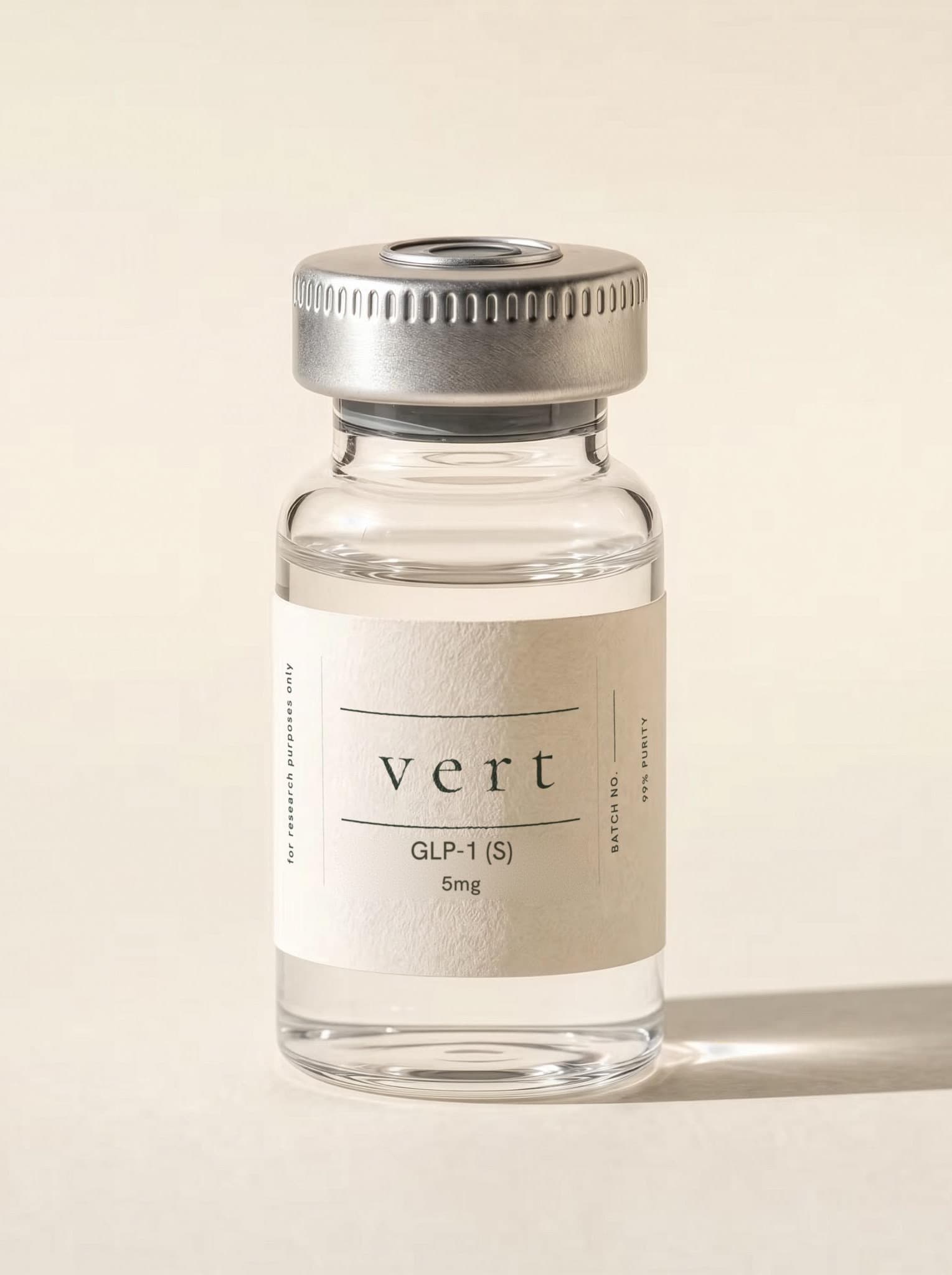
glp-1 (s)
GLP-1 receptor agonist
Research Use Only
from$119.95
All products are sold for research purposes only. We do not provide any guidance for personal use.
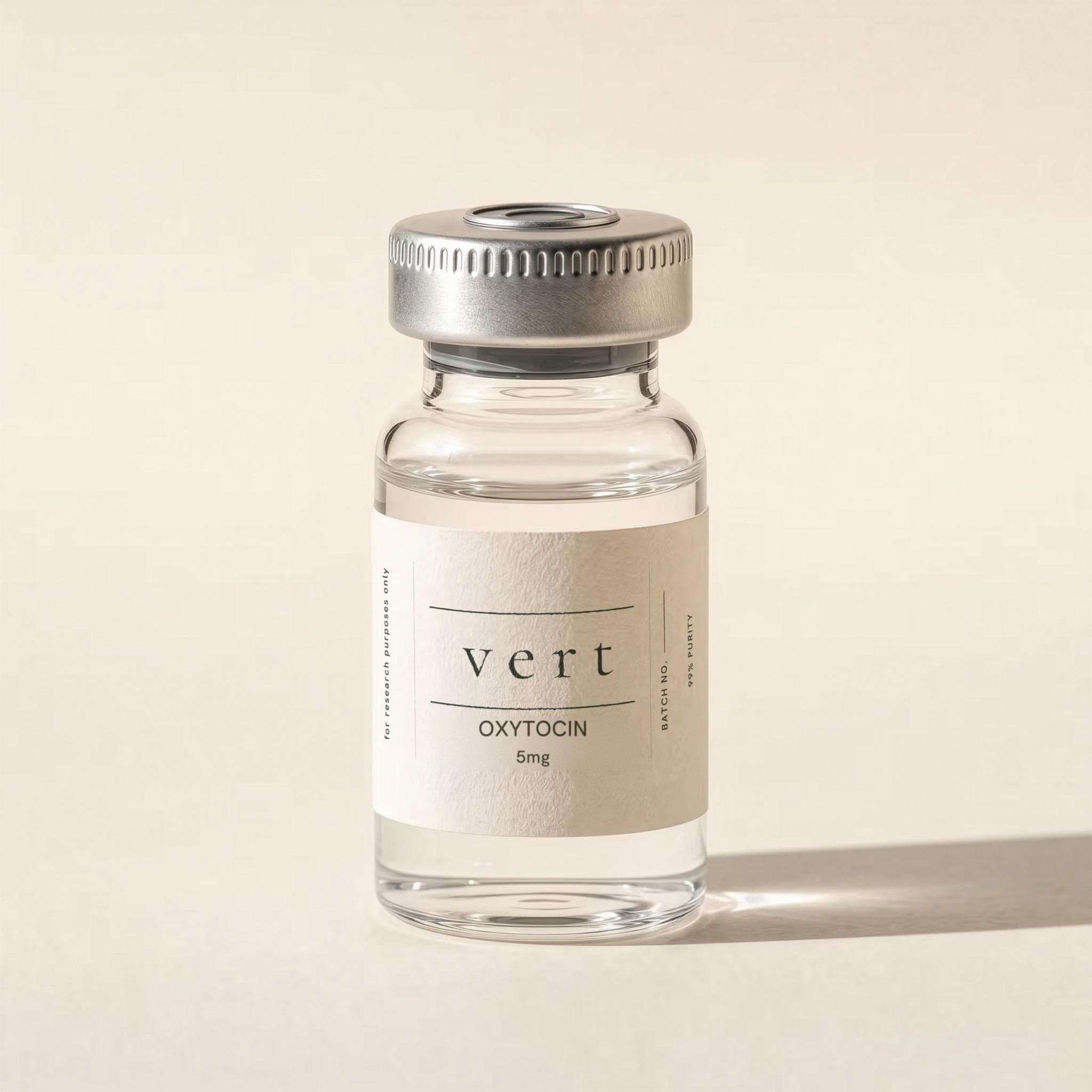
Cyclic nonapeptide, oxytocin receptor ligand
Oxytocin is a cyclic nonapeptide oxytocin receptor ligand, supplied as a white lyophilized reference material in a single 5mg vial with a published certificate of analysis.
Oxytocin is a cyclic nonapeptide: nine amino acid residues closed into a ring rather than left as an open chain. The molecular formula is C43H66N12O12S2, the molecular weight is 1007.2 g/mol, and the compound is recorded in PubChem under CID 439302 with the standard InChIKey XNOPRXBHLZRZKH-DSZYJQQASA-N. Formula and mass reconcile exactly. Taking standard atomic weights, forty-three carbons contribute 516.47, sixty-six hydrogens 66.53, twelve nitrogens 168.08, twelve oxygens 191.99 and two sulfurs 64.12, which sums to 1007.19 and rounds to the 1007.2 on the record. The formula accounts for 135 atoms in total, 69 of them heavier than hydrogen. Cyclization is an identity question rather than a formatting detail. A ring-closed peptide and the open-chain peptide of the same residue order are different chemical species, carry different masses and hold separate database records, so a formula, a mass or a registry number taken from one will not correctly describe the other. The formula carries two sulfur atoms. The catalog designation for this material is cyclic nonapeptide, oxytocin receptor ligand, and it has been investigated in laboratory research into oxytocin receptor binding. Supplied as a lyophilized reference material in one size, a sealed 5mg vial. The certificate published for that size records the appearance as a white lyophilized powder, states qualitative and quantitative chemical analysis by ultra-high-performance liquid chromatography with mass spectrometry, and certifies against a purity specification of 98 percent minimum. Stored desiccated at 68°F (20°C), away from light and moisture. It is not supplied as a solution, a spray, a gel, or any other prepared formulation, and the specification fields on this page state which figure comes from where.
>99% UPLC purity; identity confirmed by mass spectrometry. A Certificate of Analysis is published for each size, reporting that lot's identity and purity result. See our quality & COA page.
Supplied as a lyophilized reference material. Lyophilized reference materials are stored desiccated at 68°F (20°C), away from light and moisture. We do not provide reconstitution, preparation, or usage instructions of any kind.
It is a cyclic nonapeptide, which is to say a chain of nine amino acid residues closed into a ring rather than left open. The catalog designation for this material is cyclic nonapeptide, oxytocin receptor ligand. Ring closure is an identity question, not a formatting detail: a ring-closed peptide and the open-chain peptide of the same residue order are separate chemical species, differ in mass, and carry separate database records, so a formula, a mass or a registry number taken from one will not correctly describe the other. The molecular formula C43H66N12O12S2 carries two sulfur atoms. The figures printed on this page, and the figures on the certificate published with the vial, describe the cyclic species.
The molecular formula is C43H66N12O12S2 and the molecular weight is 1007.2 g/mol, indexed in PubChem as CID 439302. That mass is internally consistent with the formula: at standard atomic weights, forty-three carbons give 516.47, sixty-six hydrogens 66.53, twelve nitrogens 168.08, twelve oxygens 191.99, and two sulfurs 64.12, summing to 1007.19 and rounding to the printed 1007.2. Counted out, the formula describes 135 atoms, 69 of which are heavier than hydrogen. One caution applies to any peptide mass found in a catalog listing. The figure above is the formula mass of the peptide itself. Peptides are frequently isolated as salts, and a salt form carries additional counter-ion mass that the free-peptide formula does not include, so a mass quoted for a salt of the same peptide will legitimately be higher and will not match this figure. The certificate published with this size is the document that describes the material in the vial; read it in preference to a third-party listing.
The standard InChIKey is XNOPRXBHLZRZKH-DSZYJQQASA-N, and it is built in three parts separated by hyphens. The first block, XNOPRXBHLZRZKH, is fourteen characters hashing the skeletal connectivity, the atoms and the bonds between them. The second block is ten characters: the first eight, DSZYJQQA, hash the remaining layers of the identifier including stereochemistry, the ninth character S marks it as a standard InChI, and the tenth character A records the identifier version. The single trailing character N is the protonation indicator, and N is the value for the neutral unprotonated form. The key is a fixed-length hash rather than an encoding, so it cannot be decoded back into a structure; its use is as an exact-match search string that returns one compound rather than a name that returns many. For a peptide of defined stereochemistry the second block is the part that matters, because stereoisomers of the same connectivity share the first block and separate in the second.
The certificate is published at a fixed public path, /coa/oxytocin-5mg.pdf, and carries the date its analysis was conducted. The method printed on the document is qualitative and quantitative chemical analysis by ultra-high-performance liquid chromatography with mass spectrometry, and the material is certified against a purity specification of 98 percent minimum. The two headline figures answer different questions. Mass spectrometry establishes identity: the observed molecular ion corresponds to the expected mass of the named species. Chromatographic purity is an area-percent figure, the integrated area of the main peak divided by the total integrated peak area at the detection wavelength, and it is a relative measure of chromatographically resolved organic impurities. Area-percent is not an assay of absolute content. It does not account for water, residual solvent, counter-ion mass, or any species that neither retains on the column nor absorbs at the detection wavelength. Anything not printed on the document is not certified by it. This page states the specification, which belongs to the product and does not change; the measured figure belongs to one lot and is read off the certificate published with the vial.
It ships as a dry lyophilized reference material in a sealed vial, in one size only, 5mg. The certificate records the appearance as a white lyophilized powder. Lyophilization is freeze-drying: the material is frozen and the water is then removed by sublimation under reduced pressure, which leaves a porous cake or a loose powder rather than a compacted solid, and it is normal for that cake to sit as a thin layer or to have partially collapsed in transit without anything being wrong with it. Storage is desiccated at 68°F (20°C), away from light and moisture. Desiccation is the operative word: the dry state is what the storage figure protects, so a vial kept sealed and dry is being kept correctly. It is not supplied as a solution, a spray, a gel, or any other prepared formulation, and no preparation guidance is provided with it.
Laboratory research on this peptide is framed around oxytocin receptor binding, which is the mechanism class the catalog designation names: cyclic nonapeptide, oxytocin receptor ligand. That is the register this catalog keeps to, naming the class a compound belongs to and stopping there. v e r t supplies characterized reference material and publishes the certificate for it. It does not publish research protocols, comparisons between compounds, or any account of what a compound produces in a living system, and no such information is available on request. Material is sold for laboratory research and educational purposes only.
FOR RESEARCH & EDUCATIONAL PURPOSES ONLY