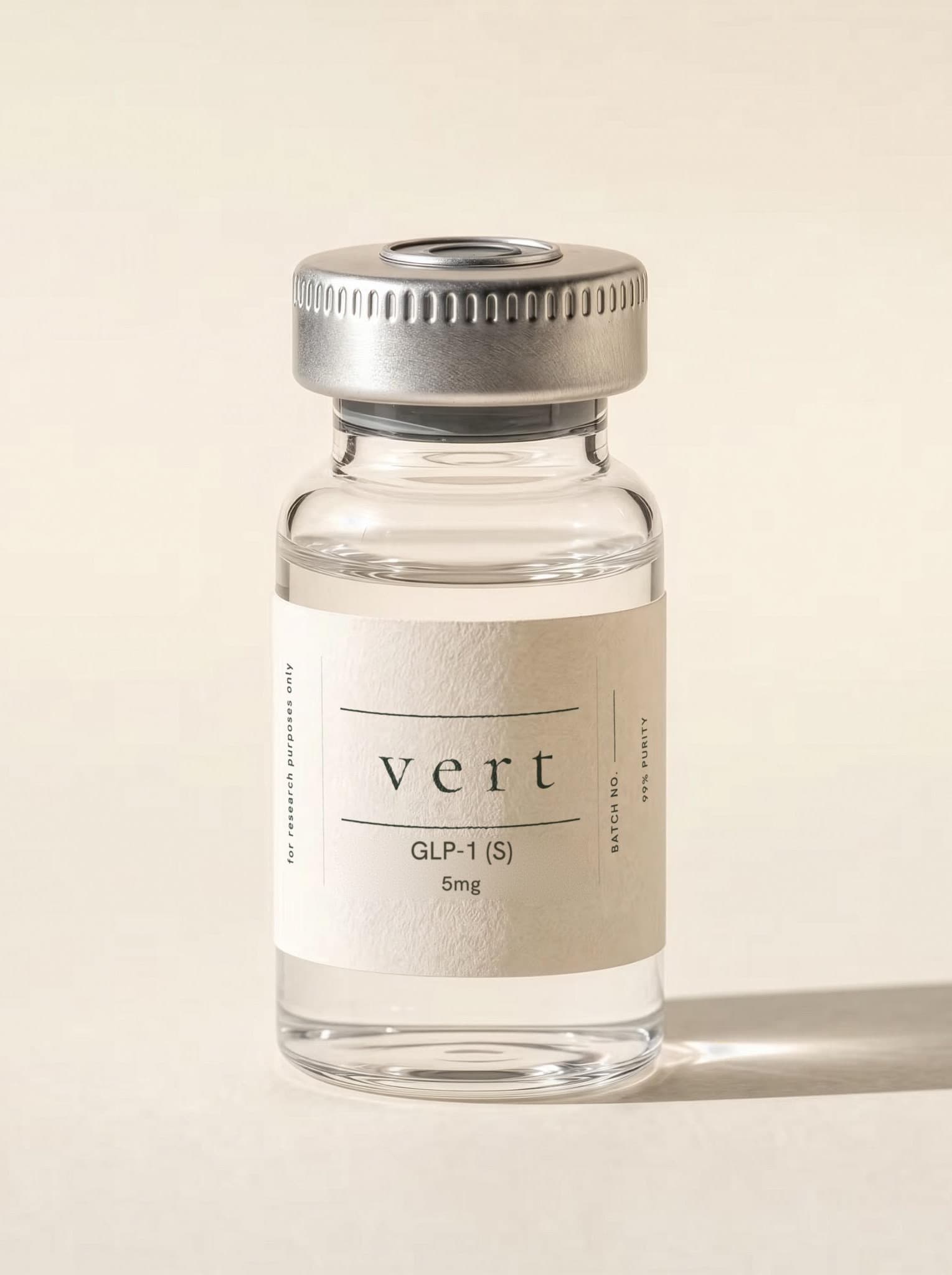
glp-1 (s)
GLP-1 receptor agonist
Research Use Only
from$119.95
All products are sold for research purposes only. We do not provide any guidance for personal use.
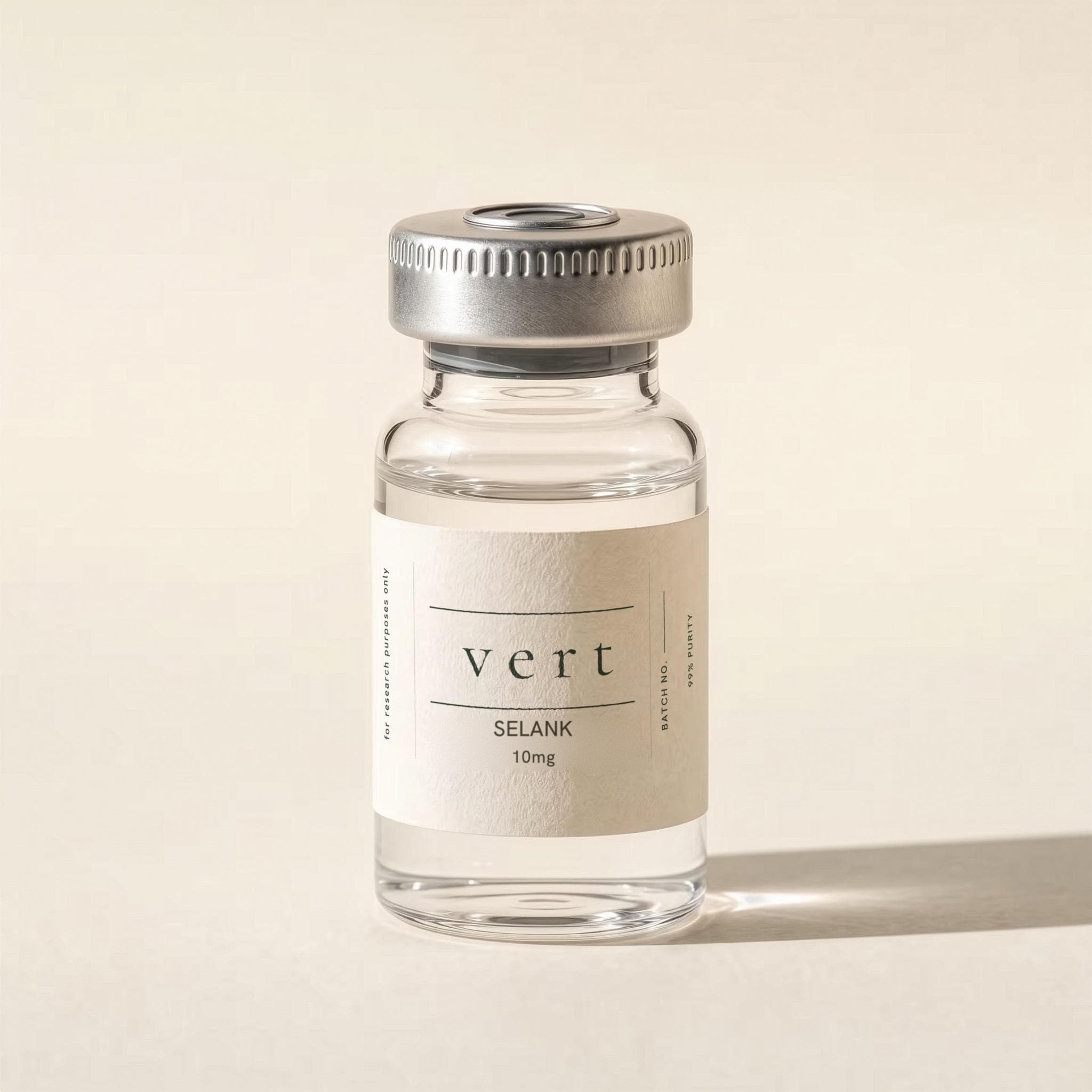
Tuftsin-derived heptapeptide analog
Selank is a synthetic tuftsin-derived heptapeptide analog, molecular formula C33H57N11O9, supplied as a lyophilized reference material in a 10mg vial with a published certificate of analysis.
Selank is a synthetic heptapeptide, seven amino acid residues joined by six peptide bonds, classified in this catalog as a tuftsin-derived analog. Its molecular formula is C33H57N11O9 at an average molecular weight of 751.9 g/mol, and it is indexed as PubChem CID 11765600 under the standard InChIKey JTDTXGMXNXBGBZ-YVHUGQOKSA-N. Formula and molecular weight reconcile exactly on standard atomic masses, which is worth showing because a mass quoted without a formula to check it against is unverifiable. Thirty-three carbons weigh 396.363, fifty-seven hydrogens weigh 57.456, eleven nitrogens weigh 154.077 and nine oxygens weigh 143.991, summing to 751.887 g/mol, which rounds to the published 751.9. Eleven nitrogen atoms across thirty-three carbons is a high count for a molecule of this size, and it is what basic side chains do to a short chain. Supplied as a lyophilized reference material in a single 10mg size, described on the certificate as a white lyophilized powder; identity and purity characterized by ultra-high-performance liquid chromatography with mass spectrometry against a specification of 98 percent minimum. It is not supplied as a solution, a spray, or any other prepared formulation. The specification fields on this page state exactly which chemical species and which document each figure comes from.
>99% UPLC purity; identity confirmed by mass spectrometry. A Certificate of Analysis is published for each size, reporting that lot's identity and purity result. See our quality & COA page.
Supplied as a lyophilized reference material. Lyophilized reference materials are stored desiccated at 68°F (20°C), away from light and moisture. We do not provide reconstitution, preparation, or usage instructions of any kind.
Selank is a synthetic heptapeptide, a chain of seven amino acid residues joined by six peptide bonds. The catalog classifies it as a tuftsin-derived analog, meaning its structure is built on the tuftsin peptide rather than being tuftsin itself. v e r t stocks it as a dry lyophilized reference material in one size, 10mg, with a certificate of analysis published for that size. Everything this page states about the molecule is either an identifier from the chemical record, a figure from that certificate, or arithmetic performed on those figures and shown in full.
The molecule is C33H57N11O9 with an average molecular weight of 751.9 g/mol, indexed as PubChem CID 11765600 and carrying the standard InChIKey JTDTXGMXNXBGBZ-YVHUGQOKSA-N. The InChIKey is worth understanding as an identifier rather than a name: it is a fixed-length hash of the full structure, so two records that agree on it describe the same connectivity and the same stereochemistry, and a single-character difference means a different substance. It is the cheapest way to confirm that a third-party record refers to the same material as the one described here. The molecular weight figure is an average over the natural isotope distribution of every carbon, hydrogen, nitrogen and oxygen in the formula, which is the kind of number a certificate prints.
It does, and the arithmetic is short enough to show. Using standard atomic masses, the thirty-three carbons contribute 396.363, the fifty-seven hydrogens 57.456, the eleven nitrogens 154.077 and the nine oxygens 143.991. Those four terms sum to 751.887 g/mol, which rounds to the 751.9 published against the formula. A formula and a mass that fail to reconcile are the first sign of a transcription error somewhere upstream, so the check is worth doing before either figure reaches a label. Note also the composition it reveals: eleven nitrogen atoms across thirty-three carbons is a high nitrogen fraction for a molecule of this size, which is characteristic of a short peptide carrying basic side chains rather than a small organic molecule of comparable mass.
The certificate for the 10mg size states qualitative and quantitative chemical analysis by ultra-high-performance liquid chromatography with mass spectrometry, against a purity specification of 98 percent minimum. That specification is the standing threshold a lot has to clear, and it is the figure this page cites, because a specification is stable in a way that a single lot result is not. The two methods answer separate questions. Mass spectrometry establishes identity, by matching an observed molecular ion against the mass expected for C33H57N11O9. Chromatographic purity is an area-percent figure, the integrated area of the main peak over the total integrated peak area, which measures organic impurities the column resolves and nothing else. Area-percent is not an assay of absolute content: it says nothing about water carried by a lyophilized cake, residual solvent from synthesis, counter-ion mass in a salt form, or any species that fails to retain on the column or to respond at the detector. What a certificate does not list is not certified by it.
Selank ships as a dry lyophilized reference material in a sealed vial, in one size, 10mg. The certificate describes the appearance as a white lyophilized powder. Lyophilization is freeze-drying: water is removed by sublimation from the frozen state under reduced pressure, which leaves a porous cake or a loose powder rather than a compacted solid, and which is why the contents of a vial can look like very little material. Storage is desiccated at 68°F (20°C), away from light and moisture. It is not supplied as a solution, a spray, a cream, or any other prepared formulation, and no preparation guidance is provided with it or available from us. Materials sold by v e r t peptides are laboratory reference materials, sold for research purposes only.
FOR RESEARCH & EDUCATIONAL PURPOSES ONLY