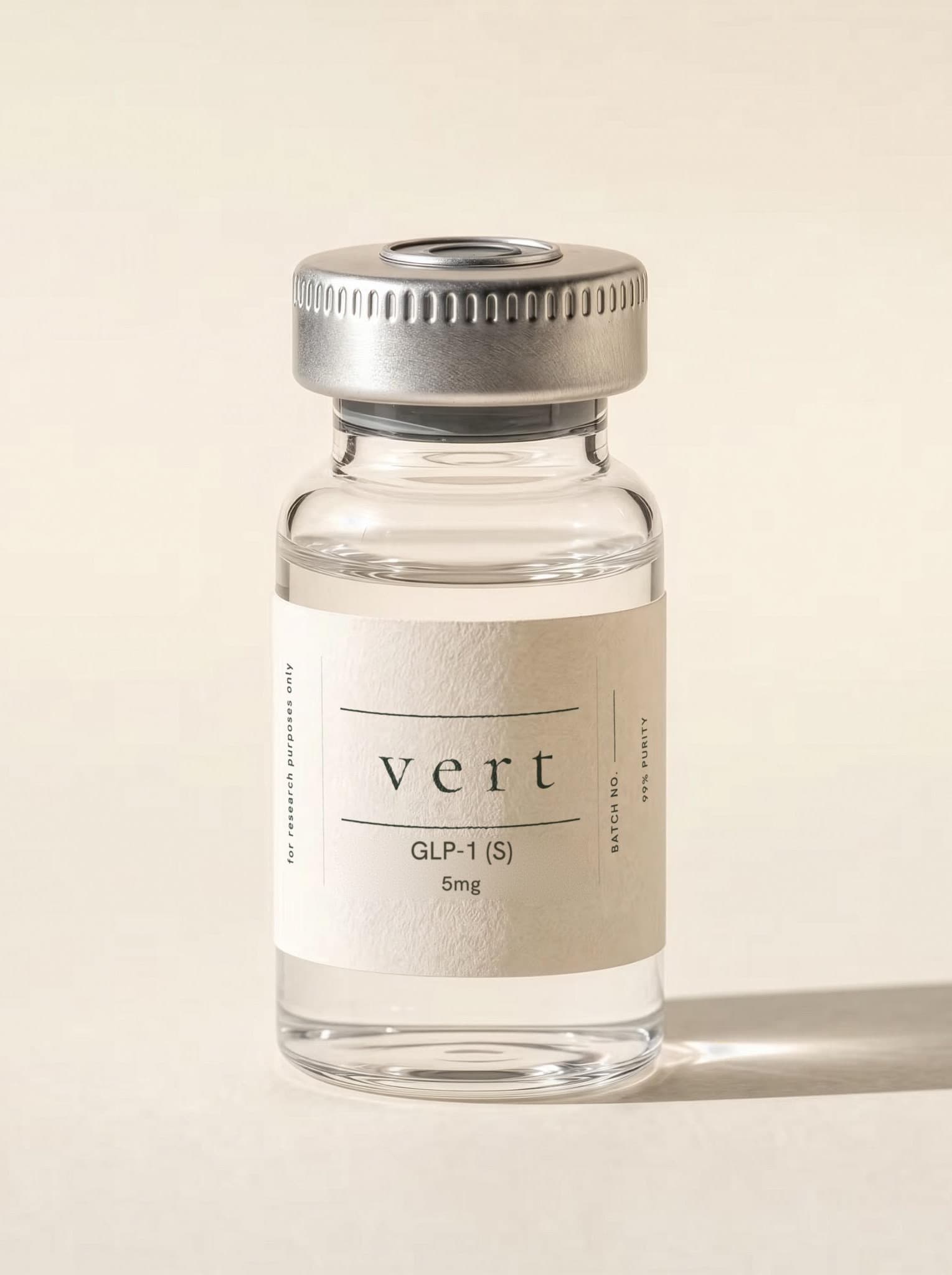
glp-1 (s)
GLP-1 receptor agonist
Research Use Only
from$119.95
All products are sold for research purposes only. We do not provide any guidance for personal use.
ACTH(4-10) heptapeptide analog
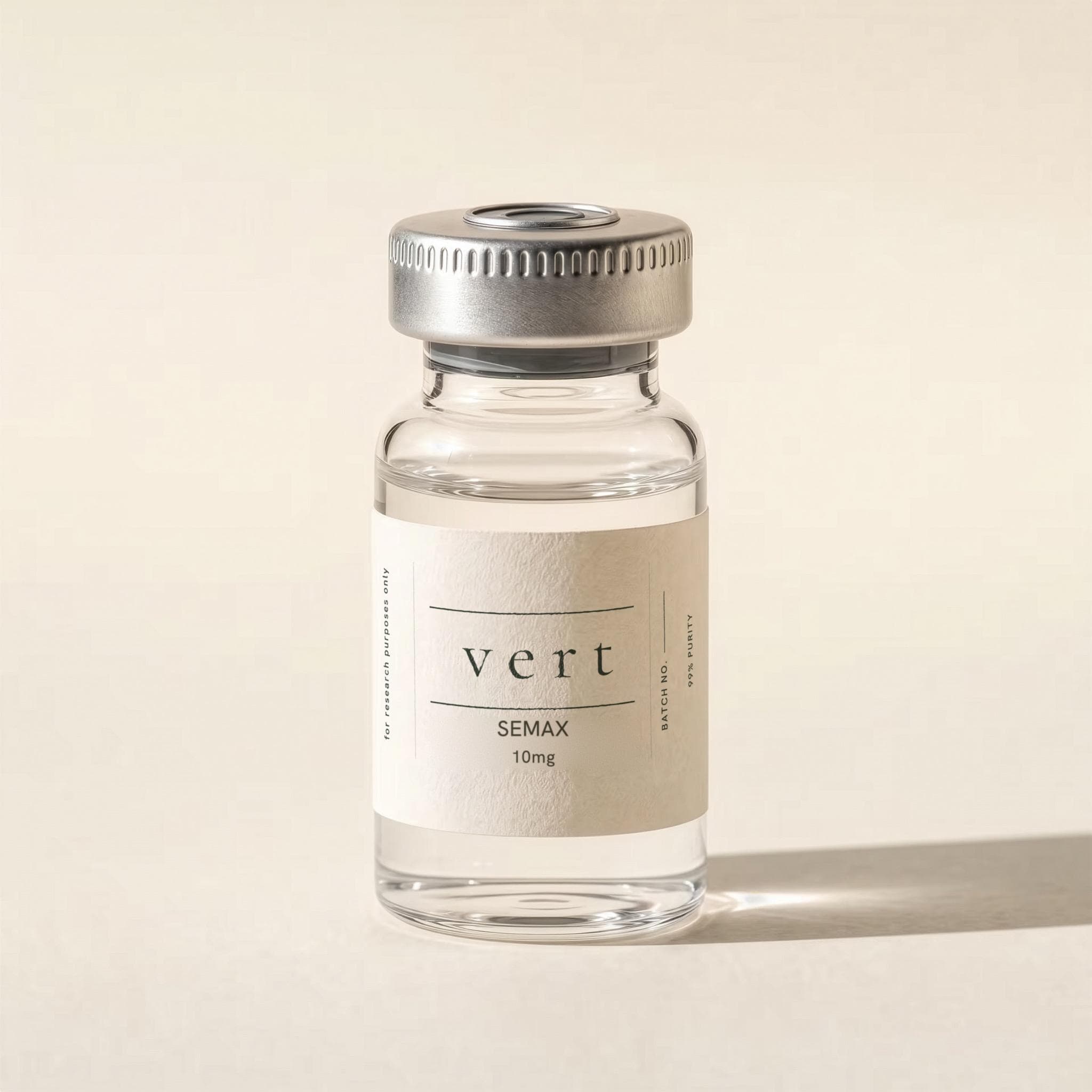
Semax is a synthetic heptapeptide analog of the ACTH(4-10) corticotropin segment, supplied as a white lyophilized reference material in a single 10mg vial with a published certificate of analysis.
Semax is a synthetic heptapeptide analog of the ACTH(4-10) segment of corticotropin, the hormone also written as adrenocorticotropic hormone. Heptapeptide means a chain of seven amino acid residues. Analog means the molecule is modelled on that segment rather than being the segment itself, so its identity is read from its own formula and identifiers rather than from the parent it is named after. The molecular formula is C37H51N9O10S at a molecular weight of 813.9 g/mol, filed under PubChem CID 9811102 with InChIKey AFEHBIGDWIGTEH-AQRCPPRCSA-N. Formula and mass reconcile against one another. Carrying standard atomic weights through C37H51N9O10S gives carbon 444.41, hydrogen 51.41, nitrogen 126.06, oxygen 159.99 and sulfur 32.06, summing to 813.93 g/mol, which rounds to the 813.9 g/mol on the identity record. On those same figures the molecule is 54.6 percent carbon, 19.7 percent oxygen, 15.5 percent nitrogen, 6.3 percent hydrogen and 3.9 percent sulfur by mass, and the single sulfur atom rules out a disulfide bridge, which would require two. Investigated in laboratory research into BDNF and neurotrophic-signaling pathways. Supplied as a white lyophilized reference material in a single 10mg vial; identity and purity characterized by ultra-high-performance liquid chromatography with mass spectrometry against a specification of 98 percent minimum. It is not supplied as a solution or as any other prepared formulation.
>99% UPLC purity; identity confirmed by mass spectrometry. A Certificate of Analysis is published for each size, reporting that lot's identity and purity result. See our quality & COA page.
Supplied as a lyophilized reference material. Lyophilized reference materials are stored desiccated at 68°F (20°C), away from light and moisture. We do not provide reconstitution, preparation, or usage instructions of any kind.
Semax is a synthetic heptapeptide analog of the ACTH(4-10) segment of corticotropin, the hormone also written as adrenocorticotropic hormone. Heptapeptide means a chain of seven amino acid residues. Analog means the molecule is modelled on that segment rather than being the segment itself, which is why the useful description of it is its own molecular formula, molecular weight and registry identifiers rather than the name of the parent it was derived from. v e r t supplies it as a dry lyophilized reference material characterized by UPLC with mass spectrometry. This page describes the molecule, its identity data and the analytical record behind the vial, and nothing beyond that.
They agree to within rounding, which is worth showing because a formula and a mass that do not reconcile are the commonest identity error in a peptide catalog listing. Carrying standard atomic weights through C37H51N9O10S gives carbon 444.41, hydrogen 51.41, nitrogen 126.06, oxygen 159.99 and sulfur 32.06. Those sum to 813.93 g/mol, which rounds to the 813.9 g/mol printed on the identity record; small differences in the second decimal between published figures reflect the atomic-weight set used to compute them rather than a different molecule. By formula mass the compound is 54.6 percent carbon, 19.7 percent oxygen, 15.5 percent nitrogen, 6.3 percent hydrogen and 3.9 percent sulfur. Two structural facts follow from the counts alone. One sulfur means one sulfur-bearing side chain and no disulfide bridge, since a bridge needs two. Nine nitrogens across a seven-residue chain leaves two beyond the backbone, so the side-chain nitrogen budget of this molecule is small, which is what a formula this oxygen-rich and nitrogen-poor describes.
The two identifiers published here are PubChem CID 9811102 and InChIKey AFEHBIGDWIGTEH-AQRCPPRCSA-N. The InChIKey repays reading in parts, because most search tools match on the first block alone. AFEHBIGDWIGTEH, the fourteen-character first block, is a hash of the molecular skeleton: connectivity only, carrying no stereochemistry. AQRCPPRC, the first eight characters of the second block, hashes the remaining layers with stereochemistry included, so two records that share a first block but differ in the second are stereoisomers of one another rather than the same substance. The S that follows is the flag for a standard InChI and the A is the InChI version character. The trailing N is the protonation indicator, and N is the neutral, unadjusted form. Match a vial by molecular formula, molecular weight, PubChem CID and the full InChIKey, then read the certificate published for the size in hand for the fields printed against that lot.
A certificate is published for the 10mg size at /coa/semax-10mg.pdf and carries the date its analysis was conducted. The method printed on the document is qualitative and quantitative chemical analysis by ultra-high-performance liquid chromatography with mass spectrometry, against a purity specification of 98 percent minimum, and the appearance is recorded as white lyophilized powder. The two headline figures answer two different questions. Mass spectrometry establishes identity, comparing the observed molecular ion against the expected mass of the named species. Chromatographic purity is an area-percent figure, the integrated area of the main peak divided by the total integrated peak area at the detection wavelength, which is a relative measure of chromatographically resolved organic impurities rather than an assay of absolute content. It does not account for water, residual solvent, counter-ion mass, or any species that neither retains on the column nor absorbs at the detection wavelength. The document reports the lot, its identity fields, appearance, quantity and purity, together with the analytical plates on the second page. It does not report water or moisture content, residual solvent, peptide content by nitrogen determination, endotoxin, or bioburden. Anything absent from the certificate is not certified by it. Read the certificate published for the size in hand rather than a third-party catalog listing.
Semax ships as a dry lyophilized reference material in a sealed vial, in one size, 10mg. Lyophilization is freeze-drying: water removed by sublimation from the frozen state under reduced pressure, which leaves a porous cake or powder rather than a compacted solid. The certificate records the appearance as white lyophilized powder; the material carries no metal center and no extended chromophore to colour the solid. It is not supplied as a solution or as any other prepared formulation. Store the sealed vial desiccated at 68°F (20°C), away from light and moisture. Those are the two variables worth controlling for a dry peptide of this composition. A sulfur-bearing side chain is the group most readily oxidized in a molecule of this makeup, and a lyophilized cake is hygroscopic by construction, since its porosity is also surface area for water uptake.
Laboratory research on this heptapeptide has been framed around BDNF and neurotrophic-signaling pathways, meaning the brain-derived neurotrophic factor system. That is a pathway name rather than an outcome: naming a signaling pathway a compound has been studied against says where the work was aimed, not what the compound produces. v e r t states no outcome of any kind for this material and supplies it as a characterized reference material for laboratory research.
FOR RESEARCH & EDUCATIONAL PURPOSES ONLY