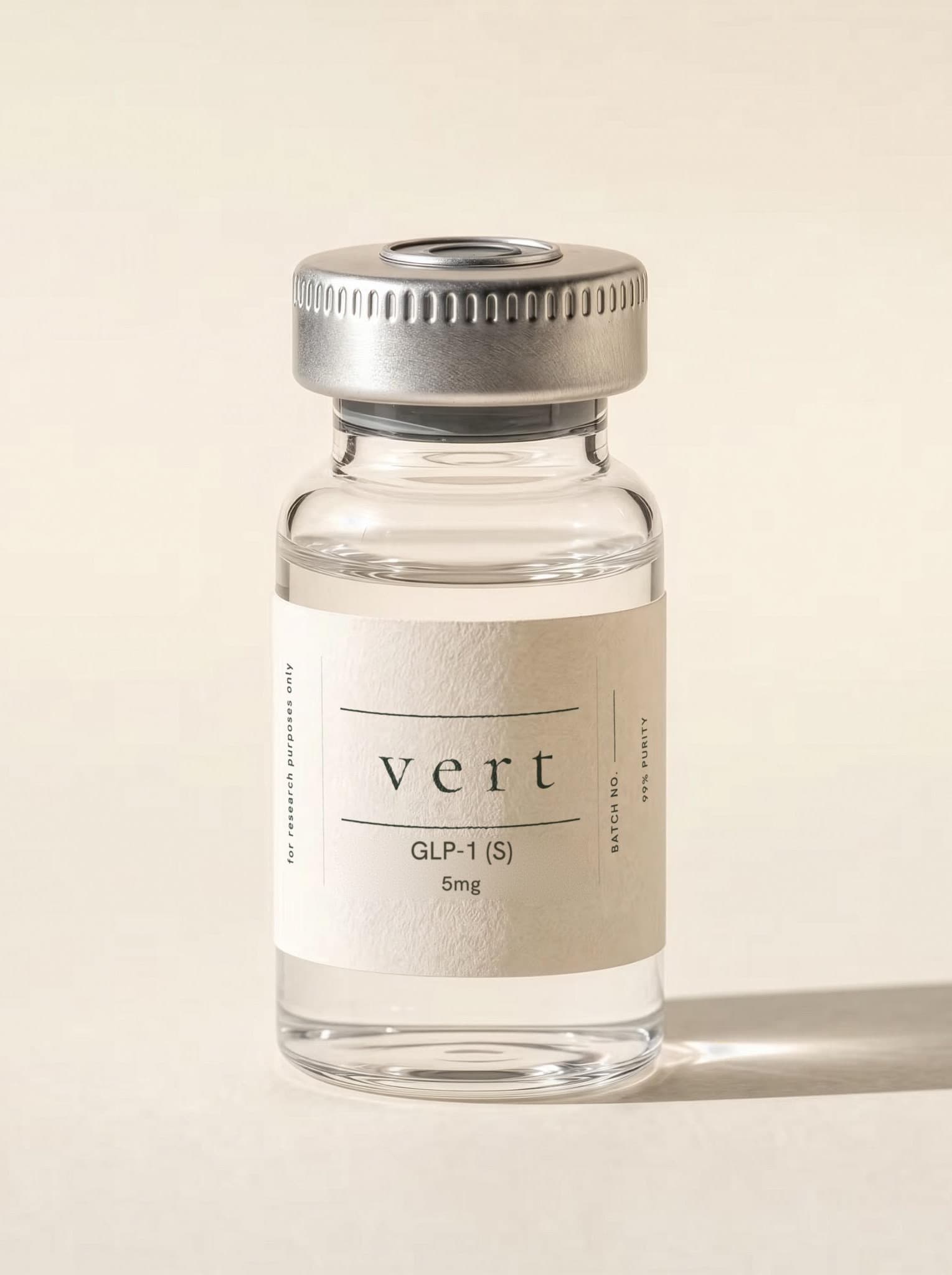
glp-1 (s)
GLP-1 receptor agonist
Research Use Only
from$119.95
All products are sold for research purposes only. We do not provide any guidance for personal use.
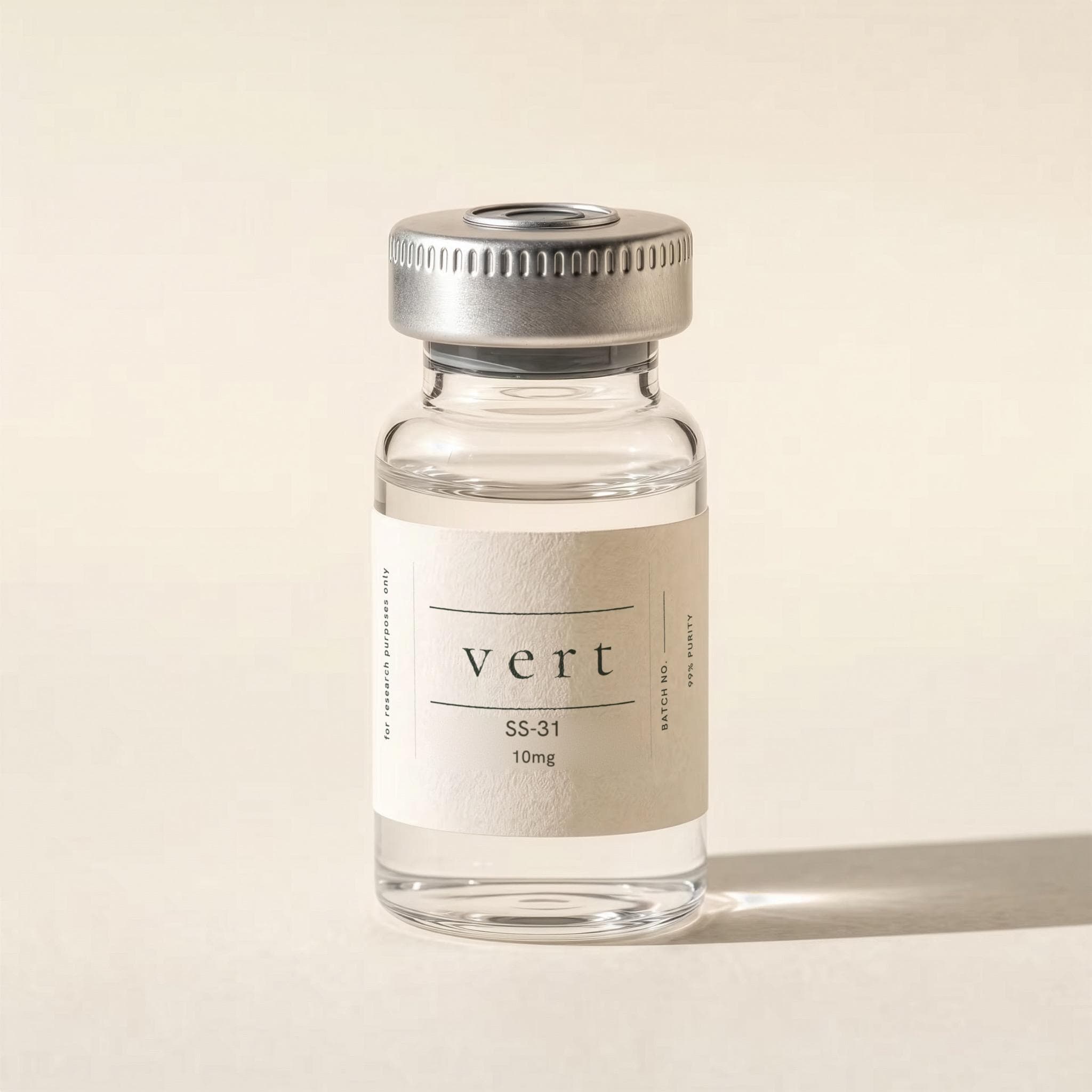
Mitochondria-targeting tetrapeptide, cardiolipin affinity
SS-31, also designated elamipretide, is a mitochondria-targeting tetrapeptide with cardiolipin affinity, filed as PubChem CID 11764719 and supplied as a lyophilized reference material in a single 10mg vial.
SS-31 is catalogued as a mitochondria-targeting tetrapeptide with cardiolipin affinity, and is also designated elamipretide. It is filed as PubChem CID 11764719 under the standard InChIKey SFVLTCAESLKEHH-WKAQUBQDSA-N. The molecular formula is C32H49N9O5 and the formula mass is 639.8 g/mol, and the two reconcile against each other exactly. Applying standard atomic weights to that formula gives carbon 384.352, hydrogen 49.392, nitrogen 126.063 and oxygen 79.995, which sum to 639.802 g/mol and round to the catalogued 639.8. That check is worth running on any listing, because a formula and a mass are quoted together far more often than they are reconciled. When cross-checking one supplier listing against another, match on the InChIKey or the PubChem CID rather than on the name. This structure carries more than one designation, and naming is where listings for it diverge. Investigated in laboratory research into mitochondrial and cardiolipin-binding pathways. No result in that work is described here and no outcome is claimed. Supplied as a lyophilized reference material in a single 10mg vial; identity and purity characterized by ultra-high-performance liquid chromatography with mass spectrometry, against a purity specification of 98 percent minimum. It is not supplied as a solution or as any other prepared formulation.
>99% HPLC purity; identity confirmed by mass spectrometry. A Certificate of Analysis is available on request. See our quality & COA page.
Supplied as a lyophilized reference material. Lyophilized reference materials are stored desiccated at 68°F (20°C), away from light and moisture. We do not provide reconstitution, preparation, or usage instructions of any kind.
Yes. SS-31 and elamipretide are two designations for one structure, and they resolve to the same chemical record: PubChem CID 11764719, standard InChIKey SFVLTCAESLKEHH-WKAQUBQDSA-N, molecular formula C32H49N9O5 at a formula mass of 639.8 g/mol. SS-31 is the research-series designation and elamipretide is the generic name for the same molecule. Because this structure travels under more than one name, naming is where third-party listings for it diverge most, and a listing that differs only in the name it prints is not necessarily describing different material. Match on the InChIKey or the PubChem CID before you compare anything else.
By mass spectrometry, comparing the observed molecular ion against the expected mass of the named species. That expected mass comes from the formula: C32H49N9O5, which under standard atomic weights sums to 639.802 g/mol and is catalogued as 639.8. A mass measurement is strong evidence of composition but it is not by itself a complete identity check, because isomers of a shared formula share a mass. The InChIKey is what records the rest. A standard InChIKey is built in blocks: the first fourteen characters hash the molecular skeleton, the second block hashes the remaining layers including stereochemistry, and the final character records the protonation state. Two stereoisomers therefore share the first block, SFVLTCAESLKEHH, and differ in the second. Comparing only the skeleton block, or comparing names, will not catch a stereochemical substitution. Comparing the full key SFVLTCAESLKEHH-WKAQUBQDSA-N will.
Certificates issued for v e r t material are written against a purity specification of 98 percent minimum, determined by ultra-high-performance liquid chromatography with mass spectrometry. A specification and a result are different statements: the specification is the floor a lot has to clear, while a result is what one particular lot measured. This page states the specification only, because a lot result describes a single lot and this listing outlives any one of them. It is also worth knowing what the figure is. A chromatographic purity figure is an area-percent value, the integrated area of the main peak divided by the total integrated peak area at the detection wavelength, which is a relative measure of chromatographically resolved organic impurities. Area-percent is not an assay of absolute content: it does not account for water, residual solvent, counter-ion mass, or any species that neither retains on the column nor absorbs at the detection wavelength. Anything a certificate does not report is not certified by it.
The catalogued class descriptor for this tetrapeptide is mitochondria-targeting with cardiolipin affinity, and laboratory research on it has been framed around mitochondrial and cardiolipin-binding pathways. Naming that pathway area is the whole of what this page does. No result is described here, no outcome is claimed, and nothing on this page should be read as a statement about what the compound produces in a living system. Journal references are deliberately not carried on this page; the pathway area is named so a researcher can search the literature directly.
SS-31 ships as a dry lyophilized reference material in a sealed vial, in one size only, 10mg. Lyophilization is freeze-drying: water is removed by sublimation from the frozen state under reduced pressure, which leaves a porous cake or powder rather than a compacted solid. It is not supplied as a solution, a suspension, or any other prepared formulation. Lyophilized reference materials are stored desiccated at 68°F (20°C), away from light and moisture. v e r t does not provide reconstitution, preparation or usage guidance of any kind, and this page carries none. Because a single size is listed, there is one specification to check rather than a set of per-size documents.
FOR RESEARCH & EDUCATIONAL PURPOSES ONLY