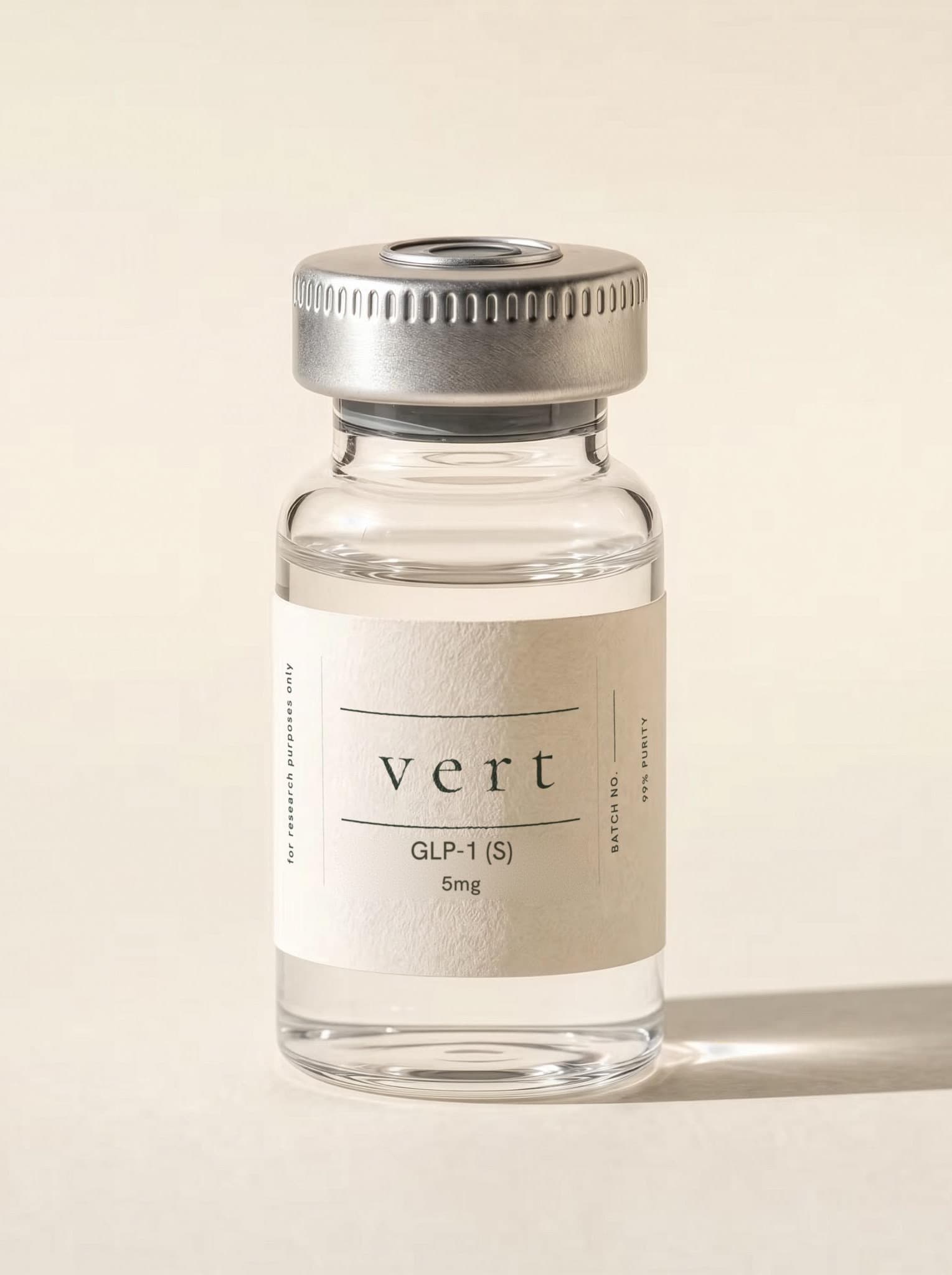
glp-1 (s)
GLP-1 receptor agonist
Research Use Only
from$119.95
All products are sold for research purposes only. We do not provide any guidance for personal use.
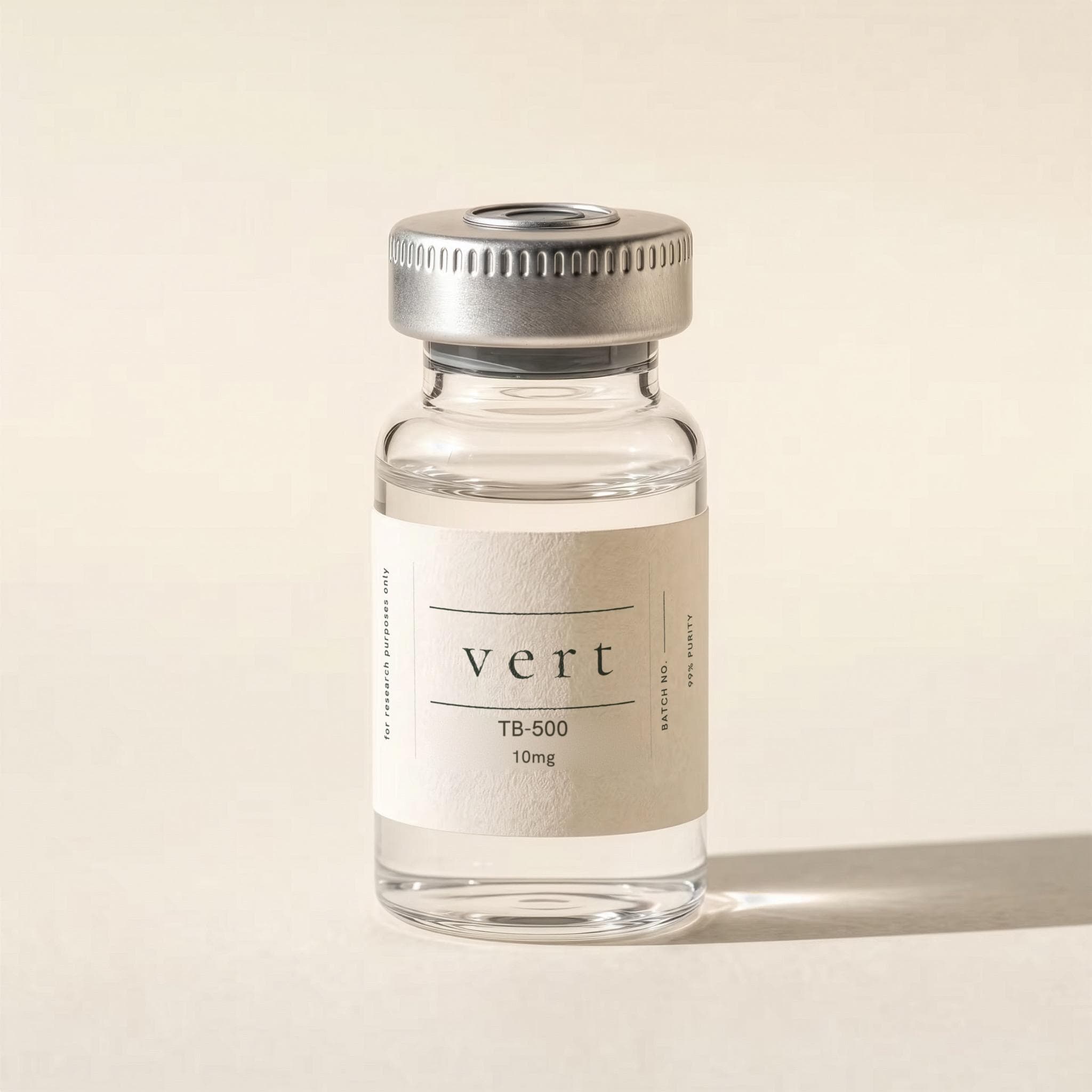
Thymosin beta-4 active fragment
TB-500 is a beta-thymosin polypeptide supplied as a lyophilized reference material in a single 10mg vial, certified against the molecular formula C212H350N56O78S at approximately 4963 g/mol, which is the mass of full-length thymosin beta-4 and not of the seven-residue Ac-LKKTETQ fragment sold under the same market name.
TB-500 is a market designation rather than a chemical name, and in the research-chemical trade it is applied to two different species. One is thymosin beta-4, the full-length beta-thymosin polypeptide. The other is Ac-LKKTETQ, an N-acetylated seven-residue fragment traded under the same label. The molecular weight certified for this vial says which of the two it describes: the certificate prints the molecular formula C212H350N56O78S at approximately 4963 g/mol, and that mass is the full-length polypeptide, not the heptapeptide. The formula and the mass reconcile against each other. Recomputed from standard atomic weights, carbon 2546.33 plus hydrogen 352.80 plus nitrogen 784.39 plus oxygen 1247.92 plus sulfur 32.06 sums to 4963.5 g/mol. One detail falls straight out of that formula and needs no outside source: there is exactly one sulfur atom per molecule. Supplied as a white lyophilized powder in a sealed 10mg vial, one size only. Investigated in laboratory research into beta-thymosin signaling pathways. Identity and purity are characterized by ultra-high-performance liquid chromatography with mass spectrometry against a purity specification of 98 percent minimum, and the certificate for the size is published at /coa/tb-500-10mg.pdf. Stored desiccated at 68°F (20°C), away from light and moisture. It is not supplied as a solution, a gel, or any other prepared formulation.
>99% UPLC purity; identity confirmed by mass spectrometry. A Certificate of Analysis is published for each size, reporting that lot's identity and purity result. See our quality & COA page.
Supplied as a lyophilized reference material. Lyophilized reference materials are stored desiccated at 68°F (20°C), away from light and moisture. We do not provide reconstitution, preparation, or usage instructions of any kind.
TB-500 is a market designation rather than a chemical name, and on this catalog it refers to a beta-thymosin polypeptide supplied as a lyophilized reference material. Two different materials circulate under the TB-500 label: full-length thymosin beta-4, and the N-acetylated seven-residue fragment Ac-LKKTETQ. They are not interchangeable, they differ substantially in mass, and a listing that never says which one it means is not telling you what is in the vial. The molecular weight certified for this vial, approximately 4963 g/mol, is the full-length figure.
Full-length thymosin beta-4. The certificate published for the 10mg vial prints the molecular formula C212H350N56O78S at approximately 4963 g/mol, and that mass belongs to the full-length polypeptide rather than to the seven-residue Ac-LKKTETQ fragment. Nothing on this page should be read as describing the heptapeptide. If you are sourcing the Ac-LKKTETQ fragment specifically, this is not that material, and the molecular weight is the fastest way to tell the two apart in any catalog listing, including ours.
The certificate prints the molecular formula C212H350N56O78S and a molecular weight of approximately 4963 g/mol. That pair is internally consistent. Recomputed from standard atomic weights, carbon 2546.33 plus hydrogen 352.80 plus nitrogen 784.39 plus oxygen 1247.92 plus sulfur 32.06 sums to 4963.5 g/mol, which rounds to the certified value. The database record identifiers for this species are PubChem CID 45382195 and InChIKey UGPMCIBIHRSCBV-UHFFFAOYSA-N. One structural detail follows from the formula alone, without any outside source: there is exactly one sulfur atom per molecule.
The certificate for this material is published at /coa/tb-500-10mg.pdf, issued against the 10mg size, which is the only size this compound ships in. The method stated on the document is chemical analysis by ultra-high-performance liquid chromatography with mass spectrometry, against a purity specification of 98 percent minimum, and the appearance recorded on it is white lyophilized powder. The two headline figures answer different questions. Mass spectrometry establishes identity, by matching an observed molecular ion against the expected mass of the named species. Chromatographic purity is an area-percent figure: the integrated area of the main peak divided by the total integrated peak area at the detection wavelength, which measures chromatographically resolved organic impurities relative to the main component. Area-percent is not an assay of absolute content. It does not account for water, residual solvent, counter-ion mass, or any species that neither retains on the column nor absorbs at the detection wavelength. Anything absent from the certificate is not certified by it. Read the certificate itself for the lot identifier and that lot's own data rather than a catalog line that summarizes it.
TB-500 ships as a dry lyophilized powder in a sealed vial, in one size only, 10mg. The appearance recorded on the certificate is white lyophilized powder. Lyophilization is freeze-drying: water is removed by sublimation from the frozen state under reduced pressure, which leaves a porous cake or powder rather than a compacted solid, so a cake that has shifted or partly collapsed in transit is a consequence of handling rather than a defect. It is not supplied as a solution, a gel, a cream, or any other prepared formulation. Storage is desiccated at 68°F (20°C), away from light and moisture, in the sealed vial.
FOR RESEARCH & EDUCATIONAL PURPOSES ONLY