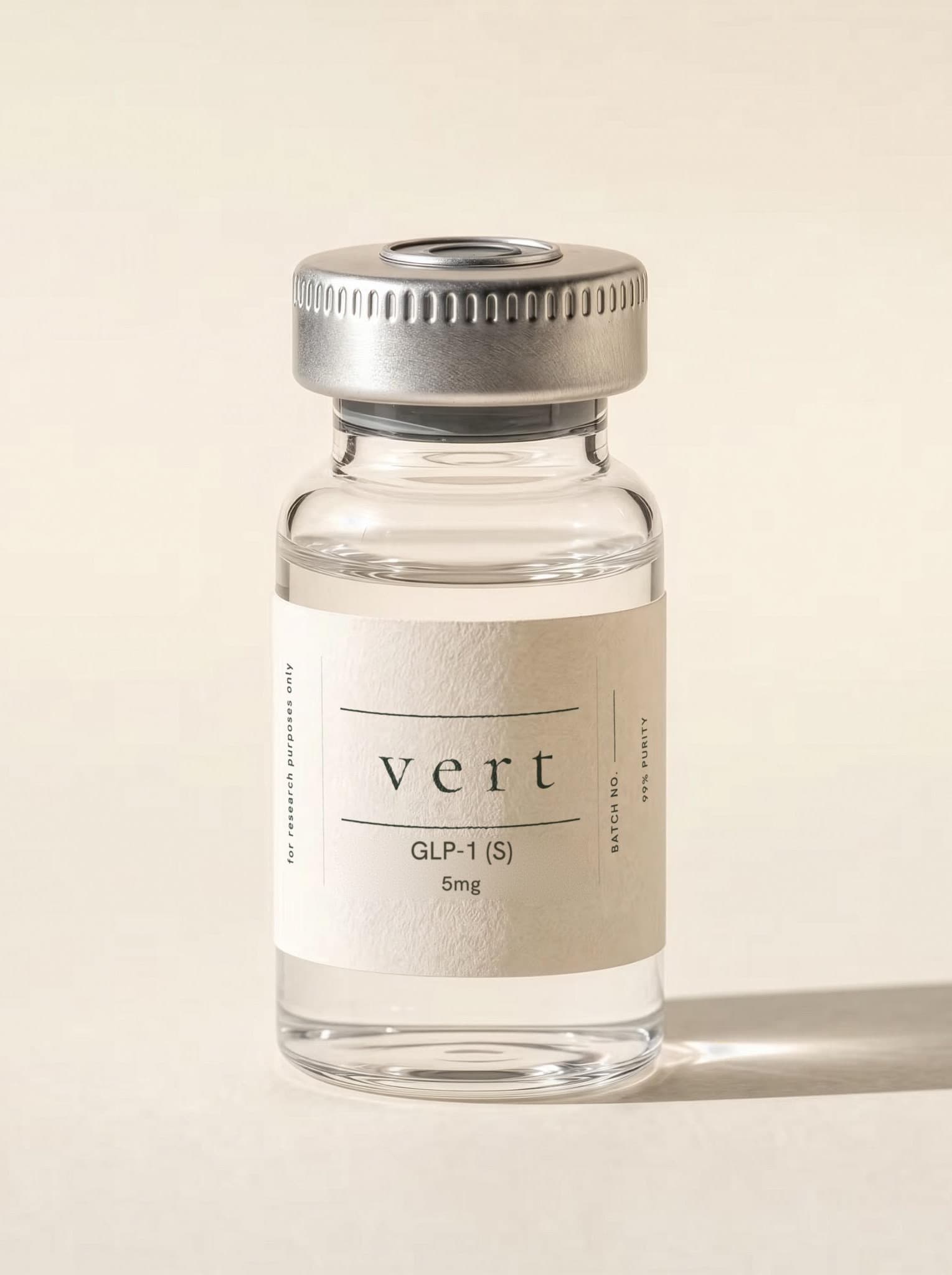
glp-1 (s)
GLP-1 receptor agonist
Research Use Only
from$119.95
All products are sold for research purposes only. We do not provide any guidance for personal use.
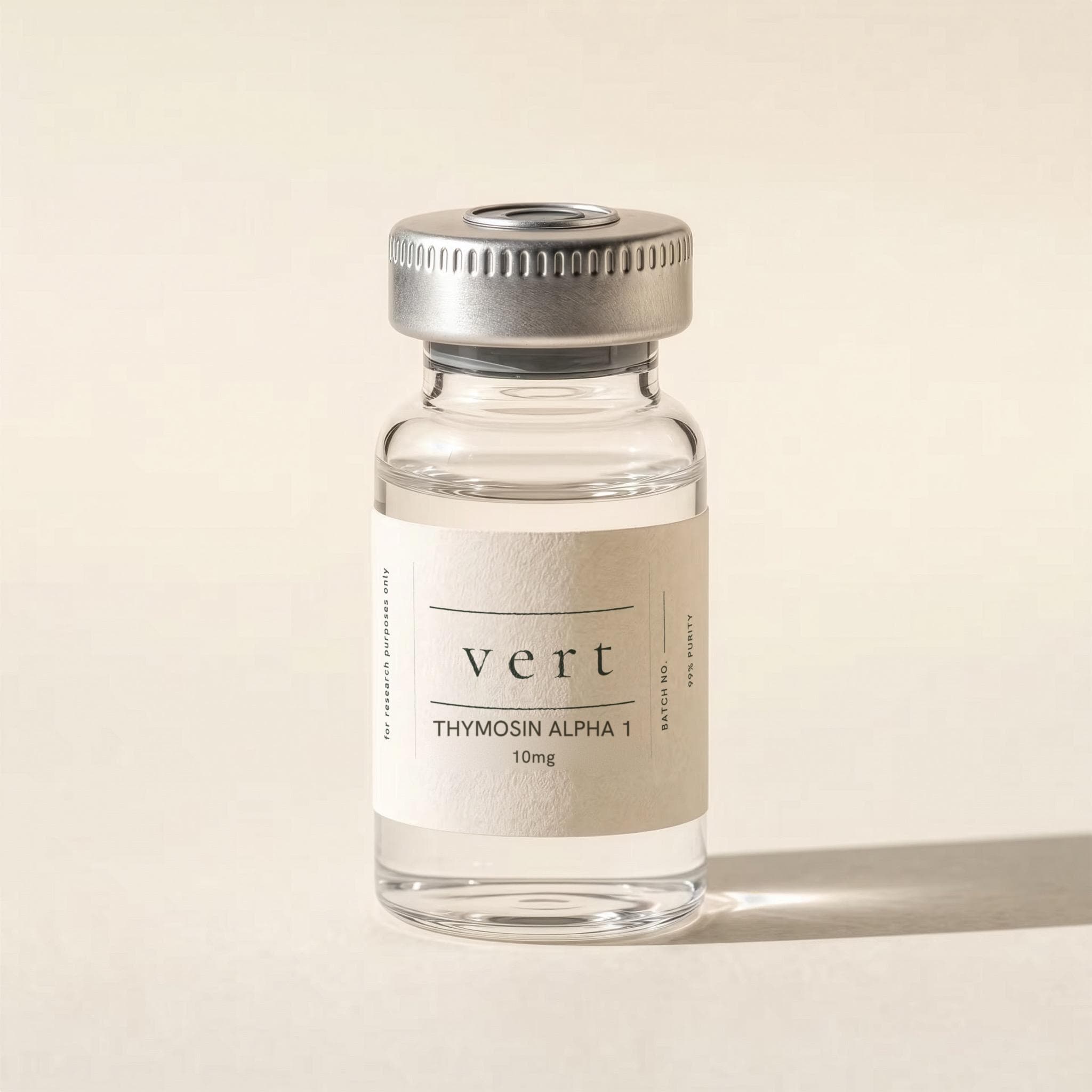
28-amino-acid prothymosin alpha fragment
Thymosin Alpha 1, filed in the chemical registries under the designation thymalfasin, is a synthetic 28-residue peptide corresponding to a fragment of the prothymosin alpha precursor, supplied as a lyophilized reference material in a single 10mg vial with a published certificate of analysis.
Thymosin Alpha 1 is a synthetic single-chain peptide of 28 amino acid residues whose sequence corresponds to a fragment of the prothymosin alpha precursor protein. The registries file it as thymalfasin, and the public record under PubChem CID 16130571 gives the molecular formula C129H215N33O55, a molecular weight of approximately 3108.3 g/mol, and the InChIKey NZVYCXVTEHPMHE-ZSUJOUNUSA-N. Formula and mass reconcile exactly. Carbon contributes 1549.42, hydrogen 216.72, nitrogen 462.23 and oxygen 879.95, summing to 3108.3 g/mol, so the published mass is the one the published formula requires rather than a figure carried across from a neighboring listing. Investigated in laboratory research into prothymosin alpha peptide signaling. It is supplied as a dry lyophilized reference material in one size, 10mg, white in appearance, sealed in a vial. Identity and purity are characterized by ultra-high-performance liquid chromatography with mass spectrometry, against a purity specification of 98 percent minimum, and the certificate is published at a fixed public path rather than issued on request. Storage is desiccated at 68°F (20°C), away from light and moisture. Nothing is supplied in solution, in a buffer, or in any other prepared form; the vial holds dry material, and the certificate describes that dry material.
>99% UPLC purity; identity confirmed by mass spectrometry. A Certificate of Analysis is published for each size, reporting that lot's identity and purity result. See our quality & COA page.
Supplied as a lyophilized reference material. Lyophilized reference materials are stored desiccated at 68°F (20°C), away from light and moisture. We do not provide reconstitution, preparation, or usage instructions of any kind.
Thymosin Alpha 1 is a synthetic peptide of 28 amino acid residues, assembled as a single linear chain, whose sequence corresponds to a fragment of prothymosin alpha, a precursor protein. That is why the catalog description reads as a fragment rather than as a protein in its own right. The registries file the same molecule as thymalfasin, and public database records are indexed under that designation, so a search on the catalog name alone will miss part of the literature. Identity on this page is stated the way the certificate states it: a formula, a mass and a database identifier, each of which can be checked independently.
The molecular formula is C129H215N33O55 and the molecular weight is approximately 3108.3 g/mol, published alongside PubChem CID 16130571. The figures are internally consistent, which is the useful part. Carbon at 12.011 across 129 atoms gives 1549.42. Hydrogen at 1.008 across 215 gives 216.72. Nitrogen at 14.007 across 33 gives 462.23, and oxygen at 15.999 across 55 gives 879.95. Those four numbers sum to 3108.3 g/mol, matching the certified mass to the tenth. A formula and a mass that do not reconcile is the ordinary signature of a listing assembled from two different source records, so the arithmetic is written out here rather than asserted.
Two identifiers on this page are independently checkable, and they fail in different ways. The InChIKey NZVYCXVTEHPMHE-ZSUJOUNUSA-N is a hashed structure identifier whose first block encodes the molecular skeleton and whose second block encodes stereochemistry and the remaining layers, so two records agreeing on the first fourteen characters but differing after the hyphen describe the same skeleton with different stereochemistry. PubChem CID 16130571 is a record pointer with no internal structure at all, so it can only be checked by opening it. The third check is arithmetic rather than a lookup: a listing that prints C129H215N33O55 against a mass other than approximately 3108.3 g/mol has taken its formula and its mass from two different records. Searching on the catalog name alone will also miss records filed under thymalfasin.
One size only: a 10mg vial of dry lyophilized reference material, white in appearance, sealed. Lyophilization removes water by sublimation from the frozen state under reduced pressure, which is why the contents present as a porous cake or a loose powder rather than a compacted solid, and why the visible volume in the vial is a poor guide to the quantity it holds. The material is not supplied in solution, in a buffer, or in any other prepared form, and no preparation guidance accompanies it.
The certificate is published at a fixed public path, /coa/thymosin-alpha-1-10mg.pdf, rather than issued on request. The method it states is qualitative and quantitative chemical analysis by ultra-high-performance liquid chromatography with mass spectrometry, run against a purity specification of 98 percent minimum. The two headline figures answer different questions. Mass spectrometry addresses identity, comparing the observed molecular ion against the mass the formula predicts. The purity figure is an area-percent measure, the integrated area of the main chromatographic peak over the total integrated peak area, and it describes only what the column resolves and the detector sees. Area-percent is not an assay of absolute content. It does not account for water, residual solvent, counter-ion mass, or any species that fails to retain on the column. This page cites the specification rather than any one lot's result, because the specification is what every lot is held to while a result describes only the lot it was measured on. Anything the certificate does not state is not certified by it.
Desiccated at 68°F (20°C), away from light and moisture, in the sealed vial it ships in. A lyophilized cake readily takes up water from ambient air, so the desiccant and an unbroken seal carry real weight, and light exposure is the second stated condition. The 68°F figure is the storage condition v e r t states for this material; it is a stated condition, not an approximation of one.
FOR RESEARCH & EDUCATIONAL PURPOSES ONLY