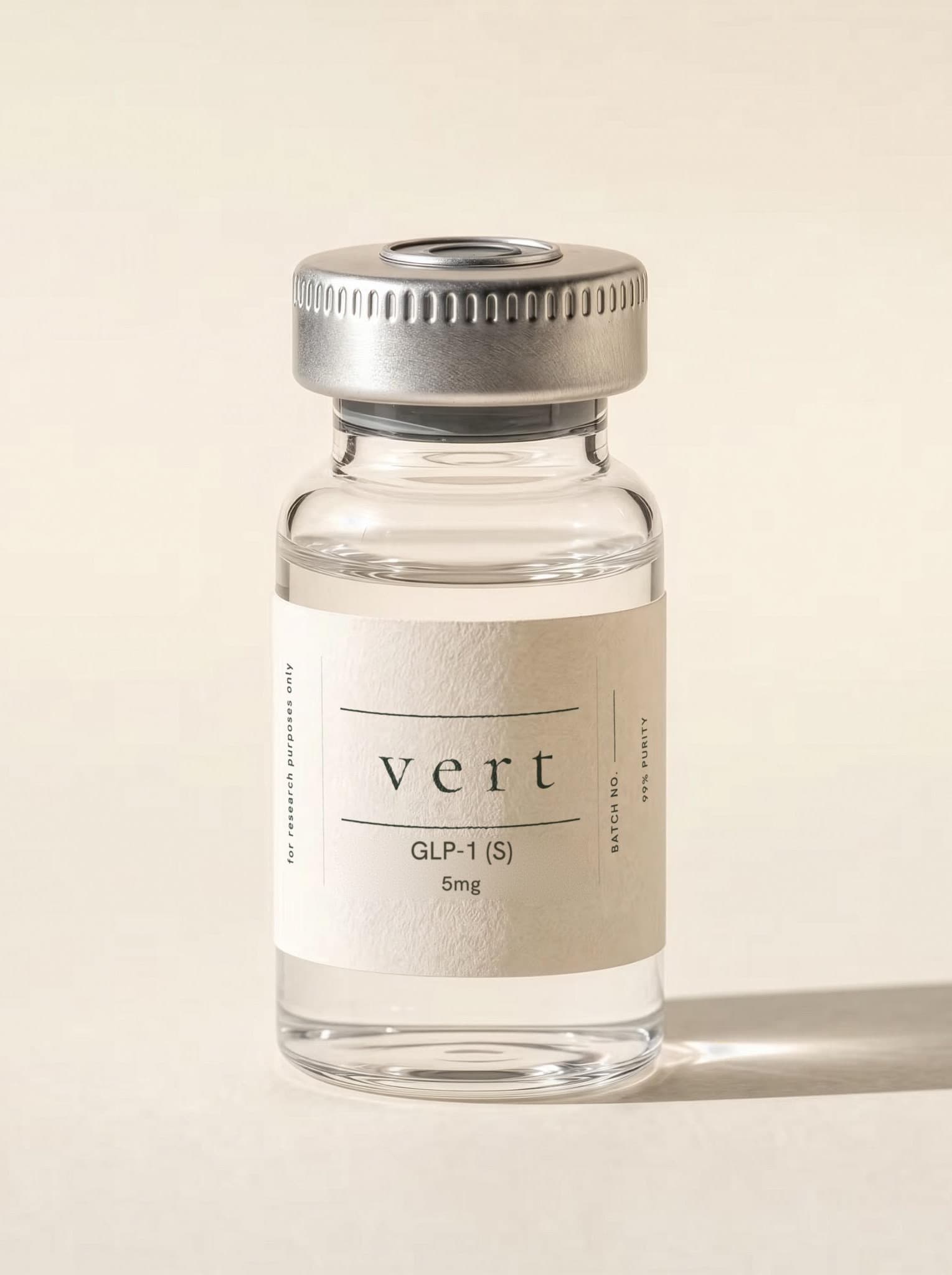
glp-1 (s)
GLP-1 receptor agonist
Research Use Only
from$119.95
All products are sold for research purposes only. We do not provide any guidance for personal use.
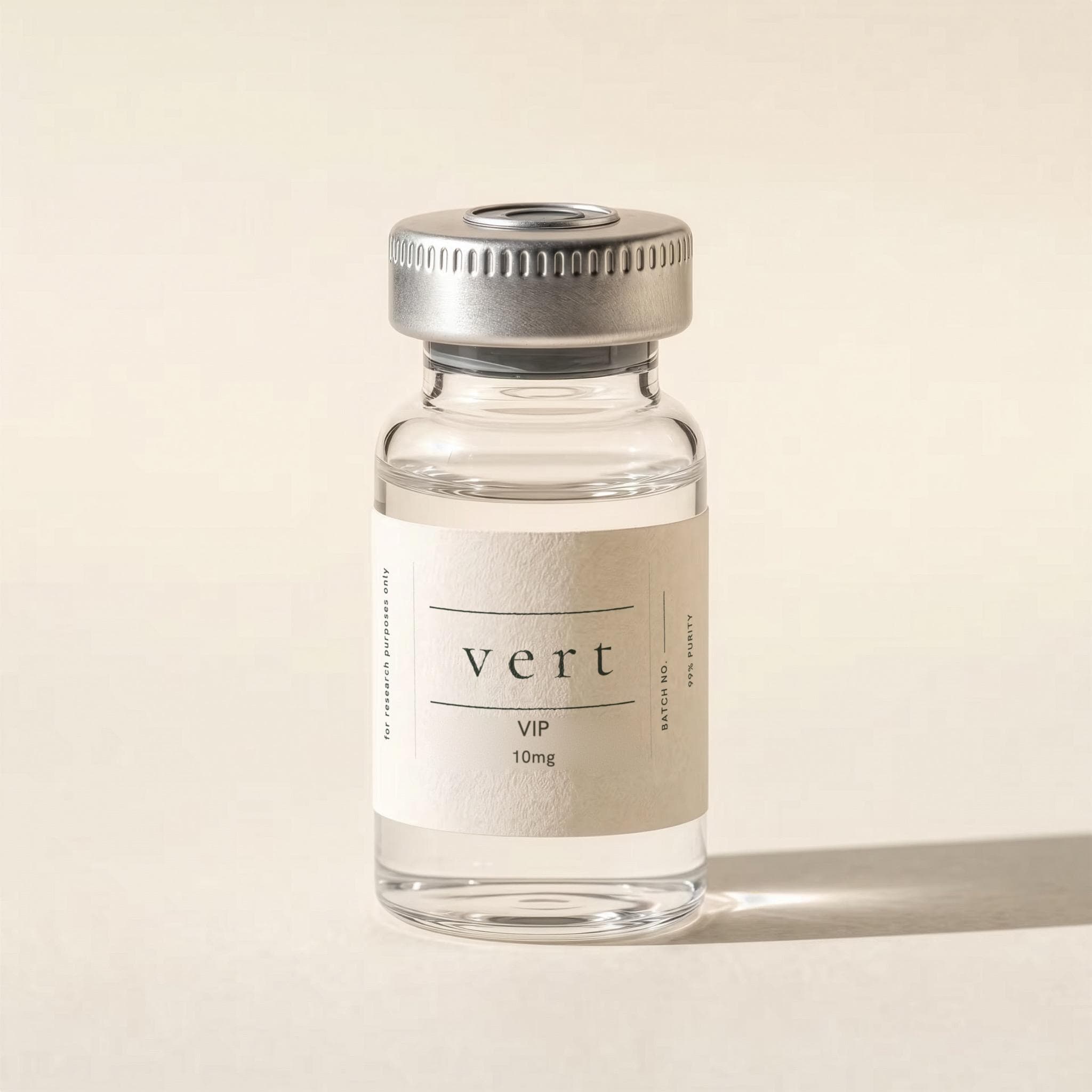
28-amino-acid neuropeptide, VPAC1/VPAC2 receptor ligand
VIP, also designated vasoactive intestinal peptide, is a neuropeptide of 28 amino acid residues and a named ligand of the VPAC1 and VPAC2 receptors, supplied as a lyophilized reference material in a single 10mg vial size.
VIP is the common designation for vasoactive intestinal peptide, a neuropeptide of 28 amino acid residues. It is named as a ligand of the VPAC1 and VPAC2 receptors, and has been investigated in laboratory research into VPAC receptor signaling pathways. The identity record published for this material is PubChem CID 53314964, molecular formula C147H237N43O43S, molecular weight 3326.8 g/mol, InChIKey VBUWHHLIZKOSMS-RIWXPGAOSA-N. The formula and the mass reconcile against each other: carbon 1765.617 plus hydrogen 238.896 plus nitrogen 602.301 plus oxygen 687.957 plus sulfur 32.06 sums to 3326.83 g/mol, which is the arithmetic check that a formula and a mass printed on the same page describe one molecule. Supplied as a lyophilized reference material in one size, 10mg. Identity and purity are characterized by ultra-high-performance liquid chromatography with mass spectrometry. The vial ships dry and sealed, not as a prepared solution or any other ready-made formulation. Each specification field below states which chemical species its figure describes.
>99% HPLC purity; identity confirmed by mass spectrometry. A Certificate of Analysis is available on request. See our quality & COA page.
Supplied as a lyophilized reference material. Lyophilized reference materials are stored desiccated at 68°F (20°C), away from light and moisture. We do not provide reconstitution, preparation, or usage instructions of any kind.
VIP is the common designation for vasoactive intestinal peptide, a neuropeptide built from 28 amino acid residues. It is named as a ligand of the VPAC1 and VPAC2 receptors, and has been investigated in laboratory research into VPAC receptor signaling pathways. That receptor-ligand class is the whole of what this page states about its mechanism. v e r t supplies it as a dry lyophilized reference material in a sealed vial, in one size.
The molecular formula is C147H237N43O43S and the molecular weight is 3326.8 g/mol, filed under PubChem CID 53314964. That mass is an average, calculated from the isotope-weighted standard atomic weights of the elements rather than from the single lightest isotope of each, so it is not the same figure as the monoisotopic mass a mass spectrometer reports for the lightest isotopic peak. A mass quoted without saying which of the two it is cannot be matched cleanly against a spectrum. The published figure is internally consistent: 147 carbons at 12.011 give 1765.617, 237 hydrogens at 1.008 give 238.896, 43 nitrogens at 14.007 give 602.301, 43 oxygens at 15.999 give 687.957, and the single sulfur adds 32.06, summing to 3326.83 g/mol against the published 3326.8. The formula, and the identity record it is filed under, are the identifying figures; a rounded molecular weight on its own is not.
PubChem CID 53314964 is a database record number rather than a structural description. It points to one specific compound entry, and quoting a CID alongside a formula is a way of saying which entry a figure was read from. The InChIKey VBUWHHLIZKOSMS-RIWXPGAOSA-N is different in kind: a fixed-length hash computed from the structure itself, readable in blocks. The first fourteen characters, VBUWHHLIZKOSMS, hash the molecular skeleton, the connectivity of the atoms with stereochemistry and isotopes stripped out. The second block, RIWXPGAOSA, hashes the remaining layers, its eight leading characters covering stereochemistry and isotopic composition, followed by a flag character S marking a standard InChI and a version character A. The final character N records the neutral protonation state. One consequence follows for anyone checking identity: two records sharing the first block but differing in the second are stereoisomers or isotopologues of one skeleton rather than unrelated compounds, so it is the full key, not the first block, that confirms a third-party listing describes the same material.
No. The molecular formula carries exactly one sulfur atom, and a disulfide bridge is a bond between two sulfur atoms, so no bridge can form within a single chain. One practical point follows for characterization. A bridged peptide weighs less than its reduced form, so mass data on bridged material has to be read against the right reference state; for a chain with one sulfur that ambiguity does not arise, and the observed molecular ion is compared directly against the expected mass of the named species.
VIP ships as a dry lyophilized reference material in a sealed vial, in one size only, 10mg. Lyophilization is freeze-drying: the material is frozen and the water is then removed by sublimation under reduced pressure, which leaves a light porous cake or powder rather than a dense solid. Nothing is supplied in prepared form, so the vial holds no solution, gel, cream or serum. Storage is desiccated at 68°F (20°C), away from light and moisture, and that figure is the one v e r t states for its lyophilized reference materials. Keeping the material dry is the substantive part: lyophilized peptides pick up atmospheric water readily, and absorbed moisture is what makes a cake collapse or discolour. v e r t does not provide reconstitution or preparation instructions of any kind.
The certificates v e r t issues state qualitative and quantitative chemical analysis by ultra-high-performance liquid chromatography with mass spectrometry, tested against a purity specification of 98 percent minimum. For this product a certificate is available on request; no certificate file is published at a fixed public path on the site, which is the case for several catalog items and is a fact about publication rather than about testing. The two headline figures answer two different questions. The mass spectrometry result addresses identity, comparing the molecular ion observed for the material against the mass expected for the named species. The chromatographic purity result is an area-percent figure, calculated by taking the integrated area of the main peak as a fraction of the total integrated peak area at the detection wavelength, and it is a relative measure of chromatographically resolved organic impurities rather than an assay of absolute content. It says nothing about water content, residual solvent, counter-ion mass, or any species that fails to retain on the column or to absorb at the wavelength being monitored. Any attribute a certificate does not name is an attribute it has not certified.
FOR RESEARCH & EDUCATIONAL PURPOSES ONLY